
Last updated November 15, 2026
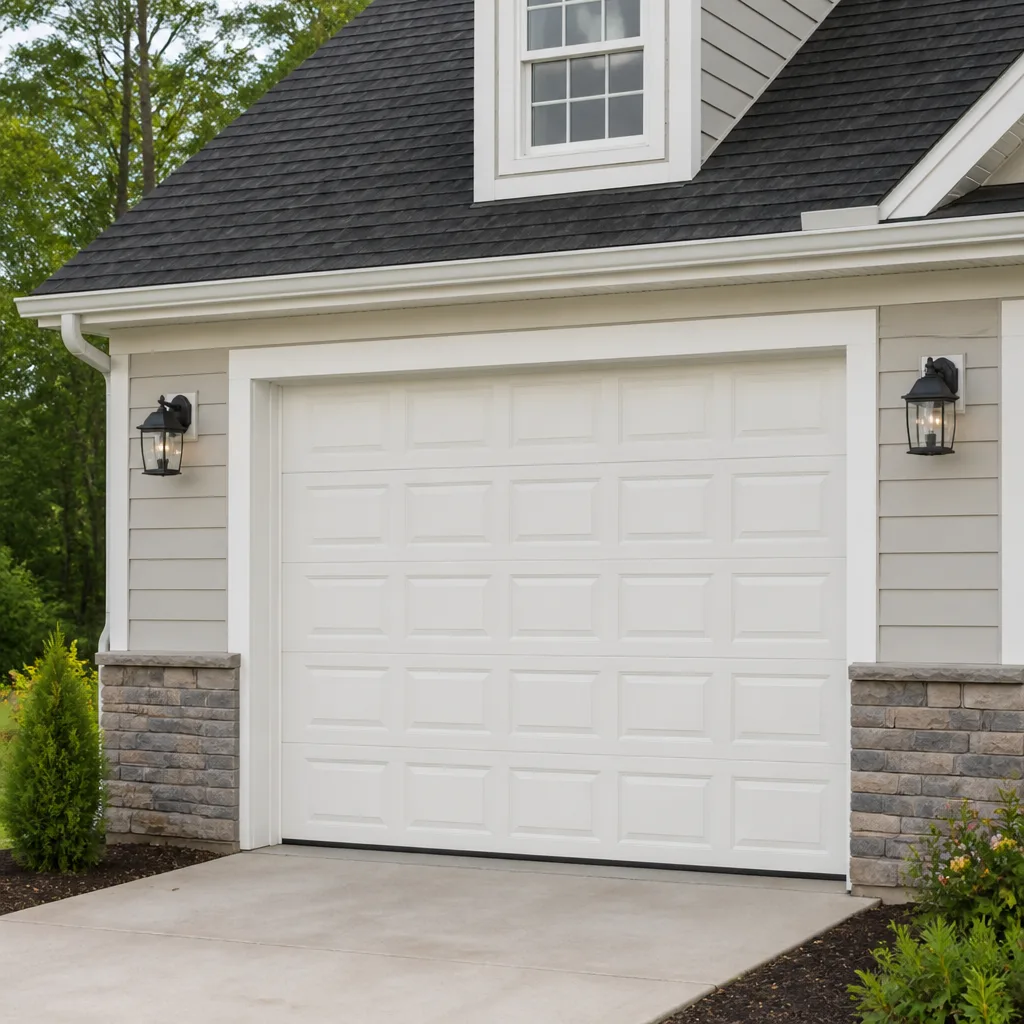 Raised-panel steel
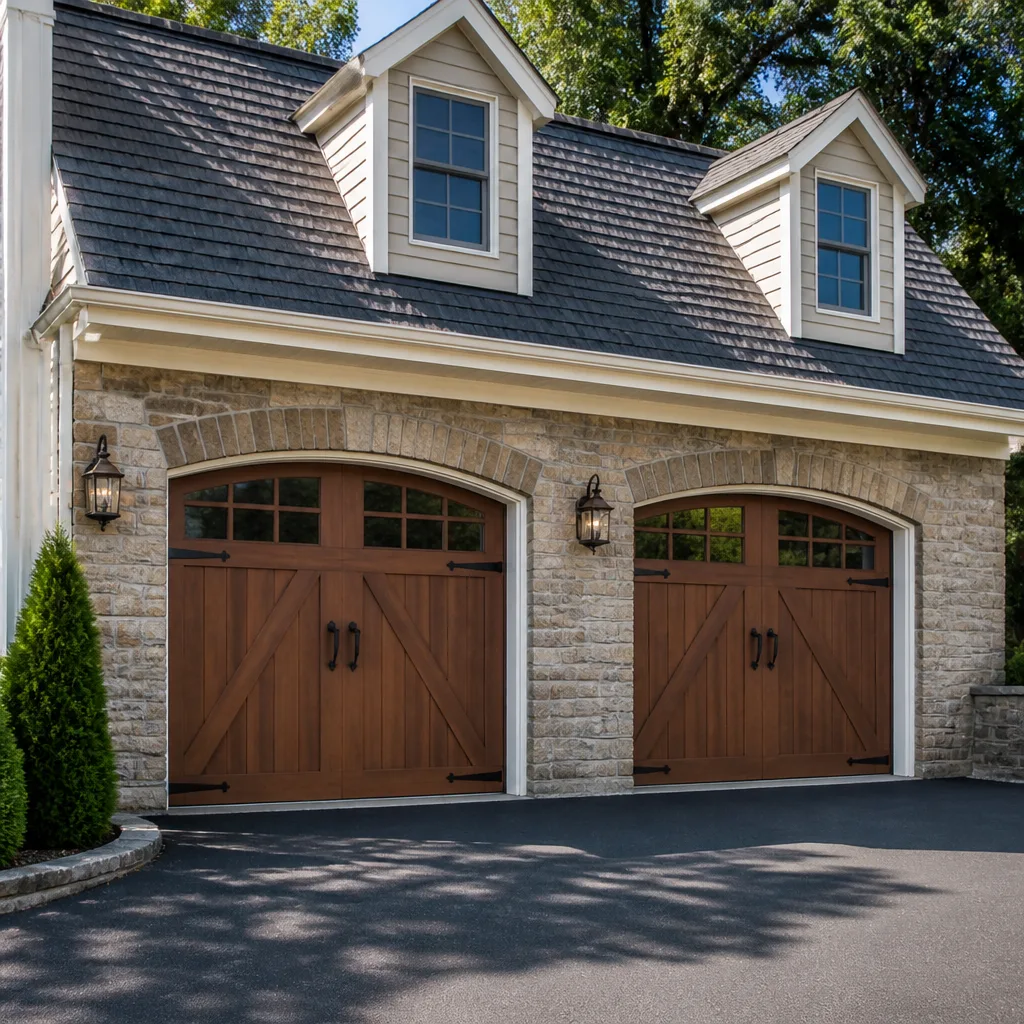 Carriage house
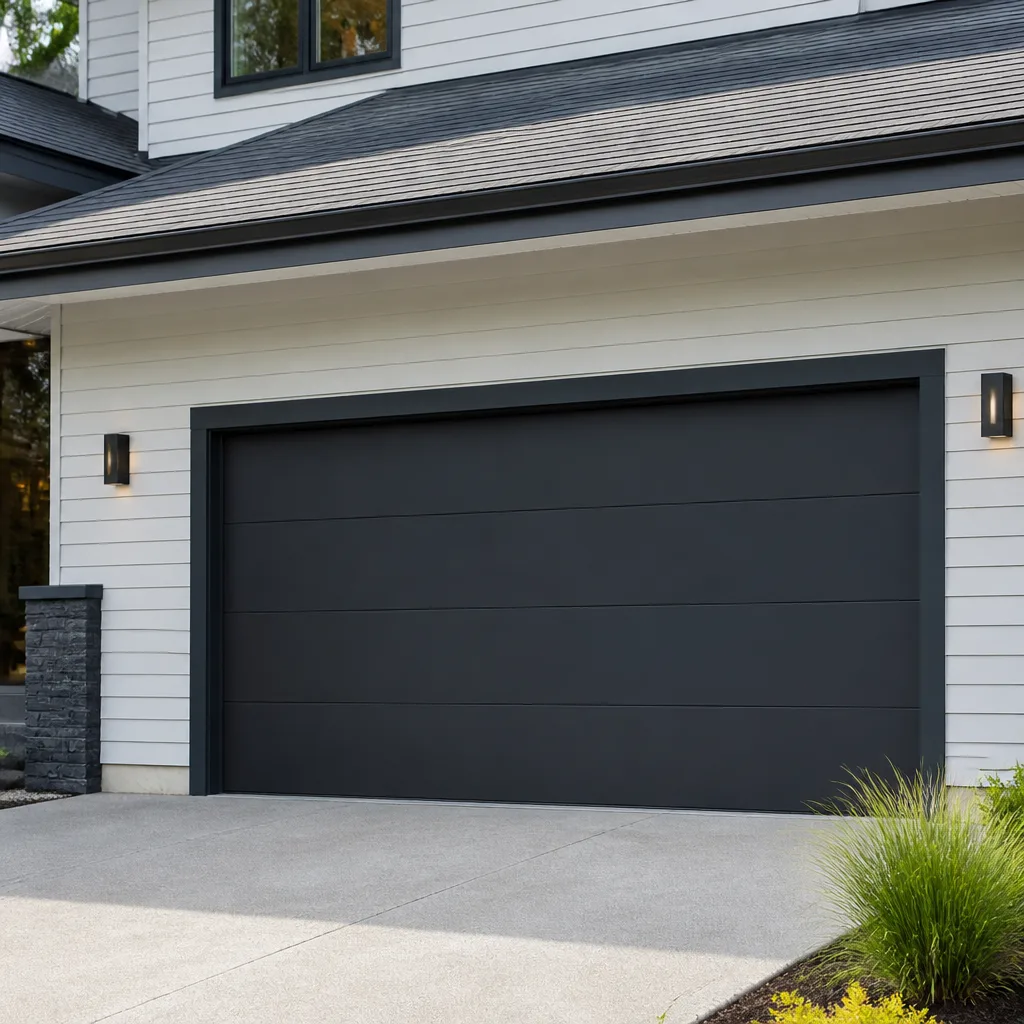 Modern flush
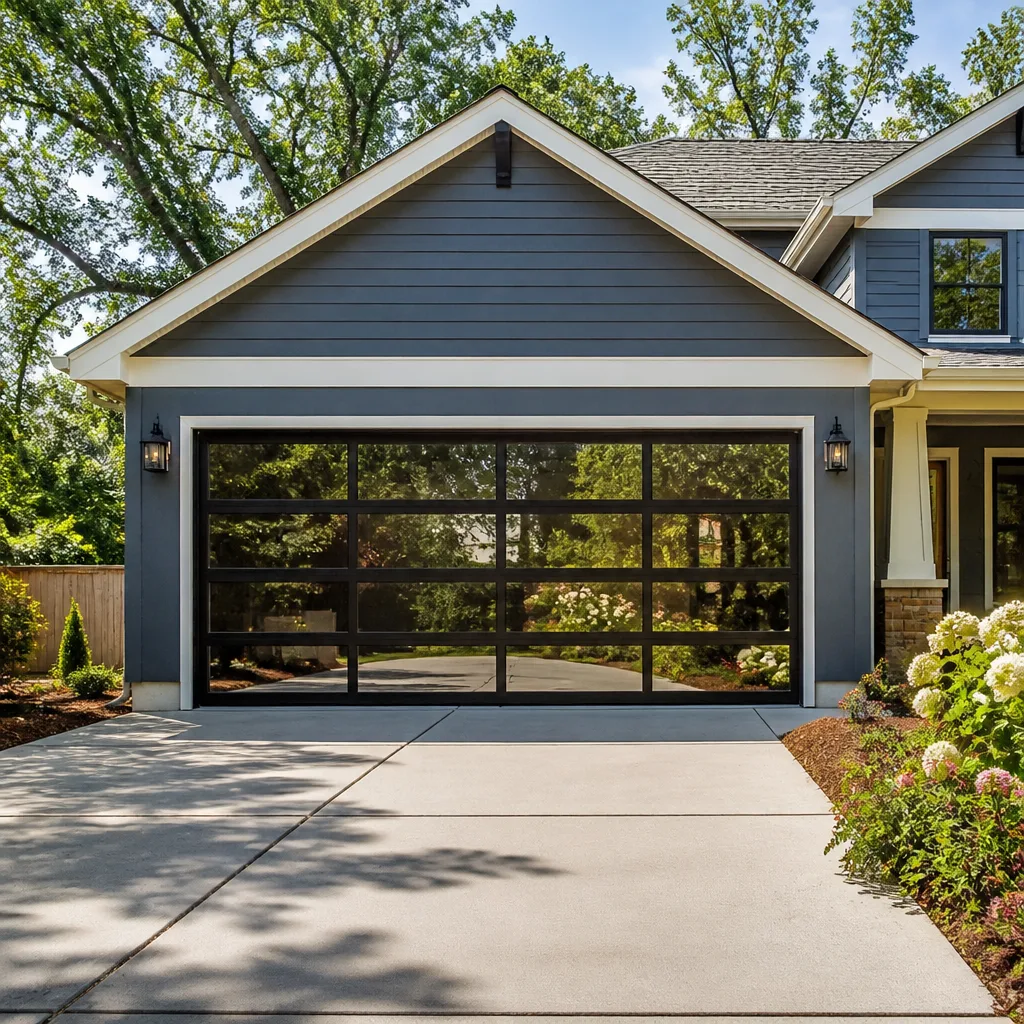 Full-view glass
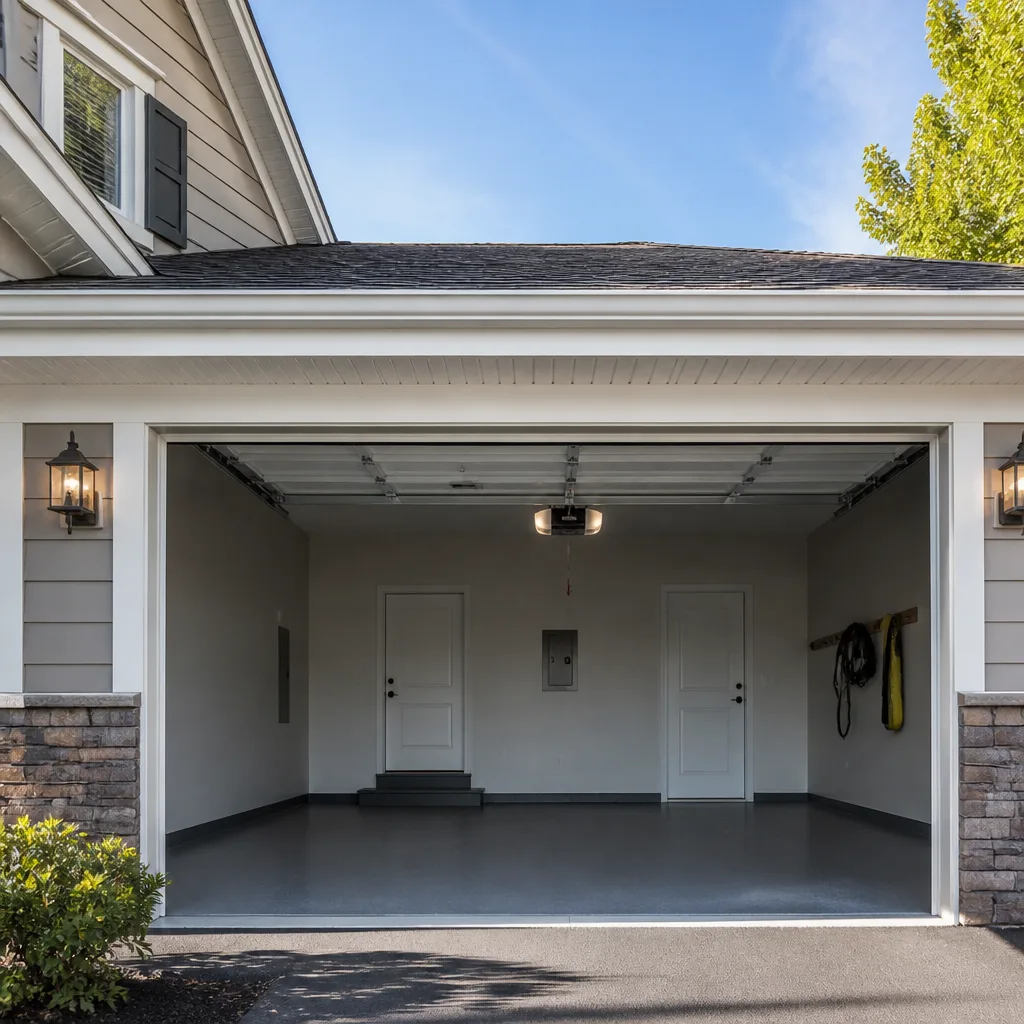 LiftMaster openers
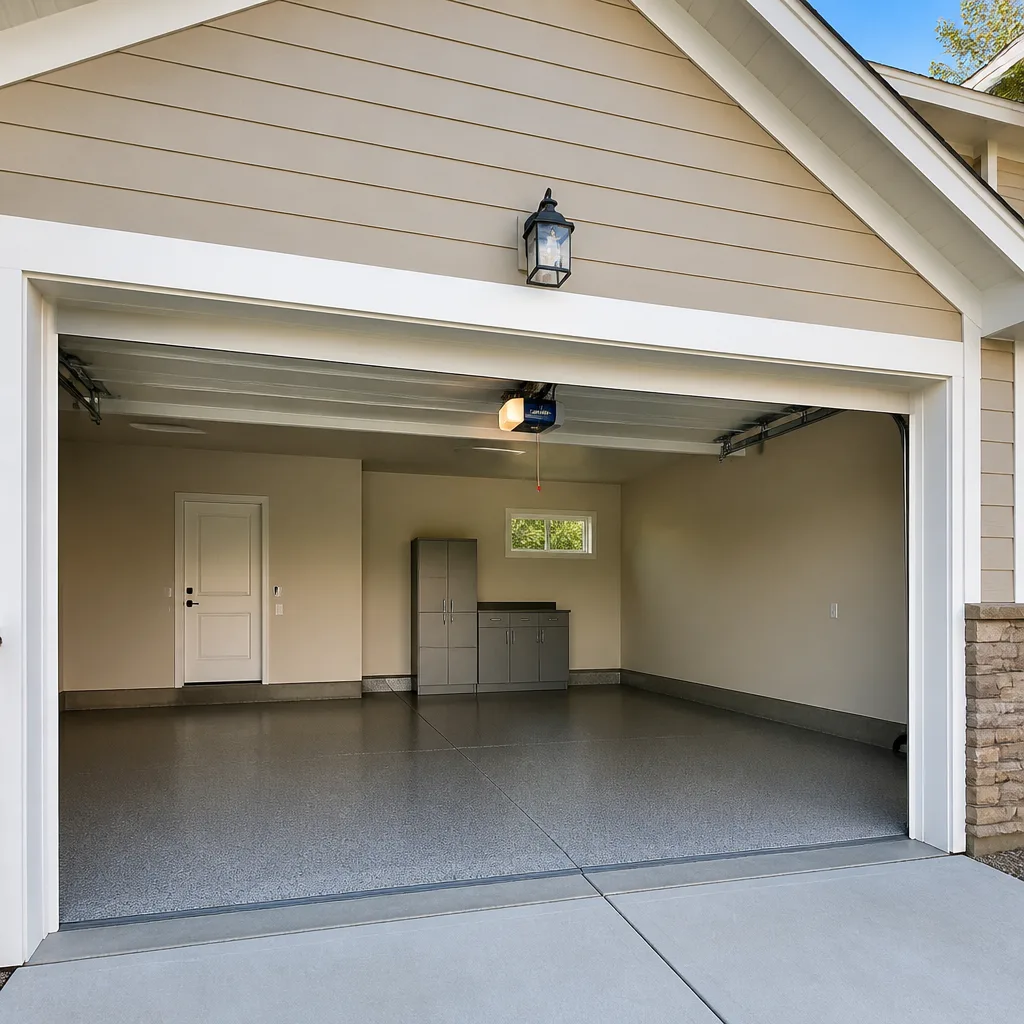 Chamberlain openers
Full 25-point door and opener safety check with every visit - springs, cables, rollers, tracks, and your LiftMaster or Chamberlain opener included
You get a price before we start. It does not change when the pro arrives.
Get your free estimateThe Complete Guide to Garage Doors in Wichita Falls
Your garage door is the largest moving part of your house, and most people can’t name a single component inside it. That’s not a knock. The door does its job quietly for years, so there’s rarely a reason to look closer. But when a spring lets go or an opener starts grinding, the same homeowner who never thought about the door suddenly has a car stranded inside. This guide is built to close that gap before you’re in crisis mode. We’ll walk through how heat and wind here wear down door materials, why a panel problem and a hardware problem get confused, what 15 years of ownership looks like, which openers survive a Wichita Falls summer, and how to read the age of a door you inherited with a house.
Quick Answer
A garage door is a mechanical system made of panels, hinges, rollers, tracks, springs, cables, and an opener, and each part has its own lifespan – typically 7 to 12 years for springs, longer for the door itself. In Wichita Falls, summer heat above 100°F and steady North Texas wind speed up wear on steel, wood, and composite doors differently, so material choice matters more here than in a mild climate. Knowing the parts and their timelines lets you repair or replace on your schedule instead of the door’s.
Styles & brands we work with
- Raised-panel steel
- Carriage house
- Modern flush
- Full-view glass
- LiftMaster openers
- Chamberlain openers
Table of Contents
- What Is Actually Inside Your Garage Door?
- How North Texas Heat and Wind Affect Steel, Wood, and Composite Doors
- Panel Problem or Hardware Problem? How to Tell the Difference
- Which Openers Hold Up in a Wichita Falls Garage
- What 15 Years of Garage Door Ownership Looks Like in Wichita Falls
- Reading the Age and Condition of a Door You Inherited
- A Simple Maintenance Routine for Local Homes
- Common Mistakes to Avoid
What Is Actually Inside Your Garage Door?
Most garage doors break the same way: one piece of hardware fails first, and the rest of the system follows if it isn’t caught. Understanding the parts is the first step toward knowing what’s worth fixing.
A sectional garage door, the most common type in Wichita Falls homes, is a stack of four to eight panels joined by hinges and guided along two vertical tracks and two curved tracks overhead. Rollers run inside those tracks. A torsion spring on a metal shaft above the door, or a pair of extension springs along the sides, does the heavy lifting. Two cables connect the spring system to the bottom brackets. The opener is separate from all of it – a motor on the ceiling that pulls the door along a rail.
Here’s what each part tends to do:
- Springs: The part that fails most often. They store the energy needed to lift the door by hand and wear out through cycles, not time. Most are rated for a set number of openings.
- Cables: Usually fail because a spring or roller failed first. Cables under tension are not a DIY project.
- Rollers: Nylon rollers last longer and run quieter than steel. Steel rollers wear flat spots and get noisy.
- Hinges: Small, cheap, and the source of a surprising number of what sound like opener problems.
- Tracks: Bend if the door is bumped. A bent track makes the door bind, which strains everything else.
- Opener: The motor, drive gear, logic board, safety sensors, and one or more remote controls.
If you only remember one thing from this section, make it this: the door and the opener are two separate systems that pretend to be one. If your garage door repair isn’t fixing the right system, you pay twice. Our technicians have up to 10 years of experience diagnosing which part of the system has actually failed, and it’s rarely whatever the homeowner first suspected.
How North Texas Heat and Wind Affect Steel, Wood, and Composite Doors
Wichita Falls sits in a climate that asks a lot of any exterior product: summer temperatures that regularly climb past 100°F, gusty spring and fall wind, and the occasional hailstorm. A garage door on a west- or south-facing wall takes the worst of it, and the material you choose has a real effect on how that wear plays out.
Steel
Steel is the most common choice, and it holds up well to heat on its own. The weak point is the finish. UV exposure and repeated cycling cause the baked-on coating to fade, chalk, and eventually peel. Once bare steel is exposed, rust takes hold at the bottom edge where it meets the ground. In Wichita Falls, steel doors on a sun-baked wall often show visible finish wear before a well-shaded door on the same street. Steel’s strength is that it doesn’t warp or crack under heat, and it costs less than the alternatives.
Wood
A wood door looks sharp and insulates well, but it’s the highest-maintenance material in this climate. Wood expands and contracts with temperature and humidity swings, and that movement stresses joints, paint, and glazing. Left unpainted, a wood door in North Texas will check and split within a few summers. Painted and resealed every few years, it lasts a long time. If you want wood, go in knowing it needs attention.
Composite
Composite and engineered doors split the difference. They’re built to resist moisture and temperature change without the maintenance a wood door needs, and they hold color better than steel. The trade-offs are cost and a smaller range of finishes than wood offers. For a homeowner who wants the look without the upkeep, composite is often the sensible middle ground.
Wind load matters as much as heat. Doors over eight feet wide, or on an open, exposed wall, get more wind pressure and need more reinforcement at the hinges and struts. If your door has started rattling in a gust, that’s the door flexing – worth addressing before it damages the tracks. Whichever material you choose, our Wichita Falls team can tell you what a typical install and lifespan look like for your specific home.
Panel Problem or Hardware Problem? How to Tell the Difference
Misdiagnosing the source of a garage door problem is the most expensive mistake a homeowner can make. A dented or misaligned panel and a worn hinge can look similar from the driver’s seat, but one needs a panel and the other needs fifteen dollars in hardware. Getting it wrong means replacing a perfectly good panel – or living with a door that keeps binding because the real problem was never touched.
Here’s how to narrow it down before you call anyone:
- Look at the door from straight on, at eye level. Is the gap uneven at the top or sides? An uneven gap usually points at a track or hinge issue, not the panel itself.
- Watch the door move. If it binds, jerks, or hesitates at one specific spot, the problem is often mechanical – a bent track, a worn roller, or a hinge.
- Check the hinge plates. Hinges wear and loosen. A loose hinge lets a panel sag, which makes the door look damaged when it isn’t.
- Inspect the panels for dents, warping, or separation. Real panel damage means a physical dent, a crack, or a gap where the panel has pushed out of line. If the door is flat and intact, the panel is probably fine.
- Test the opener separately. Disengage the door from the opener (there’s a pull cord on the rail) and move the door by hand. If it moves smoothly, the door is fine and the opener is the issue. If it fights you, the problem is mechanical.
That last step is the one that saves the most money. It splits the problem in half in about thirty seconds. From there, the diagnosis is usually obvious. For anything involving springs or cables, stop and call a professional – those parts carry dangerous tension and are not a handyman job. Routine garage door repair handles panel and hardware issues; if the door is mechanically sound but won’t respond, it’s likely an opener repair.
Which Openers Hold Up in a Wichita Falls Garage
A garage in Wichita Falls can hit 110°F in August, and that heat drives how long an opener lasts. Motors and logic boards don’t fail because of opening count – they fail because of heat cycling. An uninsulated garage on a west-facing wall is a slow oven, and the opener mounted to its ceiling gets cooked every summer afternoon.
Standard AC chain-drive and belt-drive openers do fine in most homes as long as the garage is ventilated. Where owners get into trouble is with openers mounted in a garage that traps heat – the motor and circuit board run hotter than designed, capacitors fail, and the unit won’t lift the door reliably. If your garage reaches high temperatures, an opener with a DC motor and better heat tolerance is a more durable choice than the cheapest AC unit at the store.
Brand matters less than build. The brands most Wichita Falls homeowners actually own – LiftMaster, Chamberlain, Genie, and Raynor among them – all make solid units at the top end and budget units at the bottom. A LiftMaster or Chamberlain with a DC motor will typically outlast a bargain AC unit in a hot garage regardless of name.
Two features worth having:
- Battery backup: Keeps the door working during a power outage. North Texas storms knock out power, and being able to open the door without lifting it by hand is worth the upcharge.
- Built-in safety sensors: Required by code and non-negotiable. If your current opener predates reliable safety sensors, that’s a strong reason to replace it.
We work on the brand you already have rather than steering you toward a preferred one. Garage doors are all we do, so our read on opener lifespan in this climate comes from a lot of the same units in the same conditions.
What 15 Years of Garage Door Ownership Looks Like in Wichita Falls
Over fifteen years, most Wichita Falls homeowners will go through one full set of springs, one or two opener replacements, a round of rollers and hinges, and possibly one panel or track. Fewer will replace the whole door – a well-maintained door can easily outlast its opener and its hardware. Here’s how it typically plays out, and it’s worth saying plainly that this is a schedule, not a warranty.
- Years 1-3: The system is in its prime. Normal maintenance: lubrication, a quick balance check, and a look at the weather seal at the bottom.
- Years 4-7: Springs are the first to show their age if the door is used heavily. Opener motor starts to get noisy as it heats up. Budget for one hardware tuneup in this window.
- Years 8-12: Springs typically get replaced around here. Rollers and hinges wear out. The opener may start to hesitate or reverse randomly. A well-cared-for door is still going strong; a neglected one shows it.
- Years 13-15: The opener is often the next to go. If the door panels are intact, replacing the opener is far cheaper than replacing the door. If panels are dented, warped, or the finish has failed, a new door starts to make sense.
The cost of ownership depends far more on how the door is used and maintained than on which brand was installed. A door used eight times a day on a shaded wall will outlast one used thirty times a day on a sun-baked wall, every time. The dollars vary by configuration and door size – that’s what the written estimate is for, and we set it before any work begins. If you’re weighing repair against replacement, a garage door repair quote is the honest place to start.
Reading the Age and Condition of a Door You Inherited
When you buy a house, you inherit a garage door with no owner’s manual and no maintenance record. That’s normal, and it doesn’t need to be a mystery. A garage door tells you its age and condition if you know where to look.
Work through this in order:
- Find the opener’s date sticker. Nearly every opener has a manufacturing date on the motor housing or the back panel. That date is usually within a year of when the door’s opener was installed – a good proxy for the system’s age.
- Look at the springs. Torsion springs often have a paint mark or a small tag indicating cycle rating. A visibly worn, rust-flecked, or painted-over spring is a sign the door has been in service for many cycles.
- Check the door panels for finish wear. Fading, chalky paint, and rust at the bottom edge tell you how much sun this door has caught. A door with intact finish has probably been maintained.
- Look at the hardware. Loose hinges, worn nylon rollers, and a slightly bent track say the door has been used a lot. Fresh hardware in an old door says someone has already spent money on it.
- Run it and listen. A door that moves smoothly and doesn’t hesitate is in good shape. Grinding, jerking, or reversing without hitting anything means a problem is brewing.
If the inspection turns up only wear – never a replacement – you’re in good shape. A maintenance visit and a hardware refresh will carry the system for years. If you find a spring that’s overdue, a door that’s clearly warped, or an opener older than about a decade, plan for replacement on your schedule, not when it fails. If you’d rather not guess, call us and we’ll give you a straight read. Our Hayden Garage Door Repair team works on whatever system the seller left you.
A Simple Maintenance Routine for Local Homes
Five minutes a month and a proper service every year or two is enough to get most of the lifespan out of any door in this climate. Here’s the routine we’d suggest for Wichita Falls homes.
Monthly:
- Look at the door and listen to it move. Note new noise, hesitation, or misalignment.
- Check the safety sensors at the base of the tracks. The door should reverse when a person or object crosses the beam.
- Test the opener’s force setting by placing a two-by-four flat under the door – the door should reverse on contact.
Every few months:
- Lubricate the hinges, rollers, and spring shaft with a garage-door-safe lubricant. Avoid WD-40 on the moving parts – it’s a light oil, not a lubricant for this purpose.
- Wipe down the bottom weather seal and check for cracking. Texas heat dries seals out and they lose their seal against the floor.
Every year or two:
- Have the springs, cables, and door balance checked by a technician. This is the part where DIY is genuinely dangerous – springs and cables under tension can cause serious injury, and a professional check is far cheaper than an emergency repair.
- Touch up any visible paint failure on a steel or wood door. Every chip is a place for rust or rot to start.
If you’re not sure what you’re looking at, a scheduled garage door opener repair visit is a good time to have a technician do a full-system check while they’re there.
Common Mistakes to Avoid
- Greasing the tracks. Lubricate the hinges, rollers, and spring shaft, not the tracks themselves. Grease in the tracks collects grit and turns into a grinding paste that wears the rollers. This is probably the most common DIY error we see.
- Assuming every noise is the opener. A door that groans or jerks is usually a mechanical issue – worn rollers, a loose hinge, a bent track. Replacing the opener won’t fix a door problem.
- Ignoring a sway or rattle in wind. In a Wichita Falls spring, a door that shudders in a gust is telling you the reinforcement is inadequate or the tracks are already out of line. Left alone, it warps the panels.
- Letting a broken spring sit. A door running on one broken spring overloads the remaining spring, the opener, and the cables. What starts as one spring becomes a full hardware replacement.
- Trying to adjust a torsion spring yourself. Springs under tension can cause serious injury, and there’s no safe shortcut. Call a professional – this is not a handyman task.
- Buying a door by panel count and color alone. The panels are the visible part, but the reinforcement struts, wind-load rating, and insulation value are what determine how the door holds up here. Spec them in the quote.
- Choosing the cheapest opener for a hot garage. Heat is the biggest killer of openers in this climate. A DC-drive, heat-tolerant unit lasts years longer than a bottom-of-the-line AC unit in a garage that hits 110°F.
See the difference
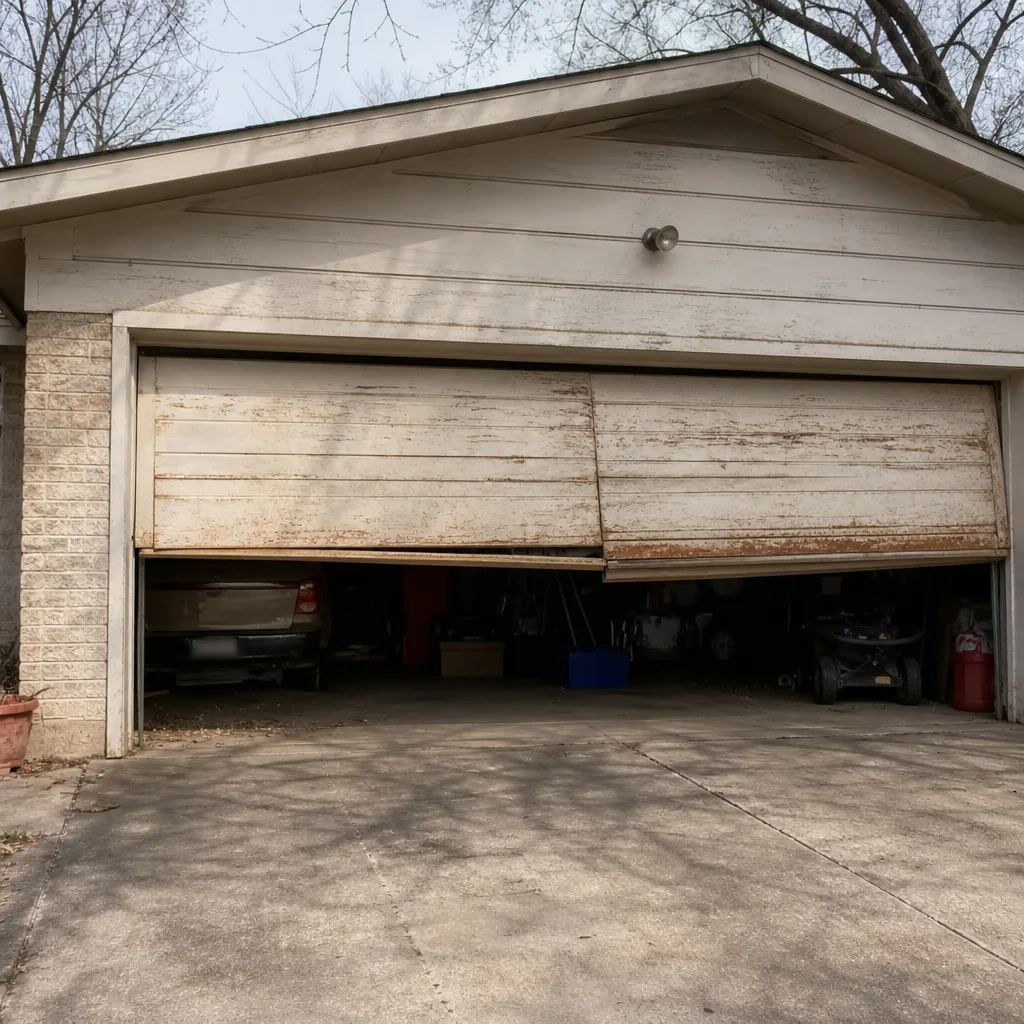 Before
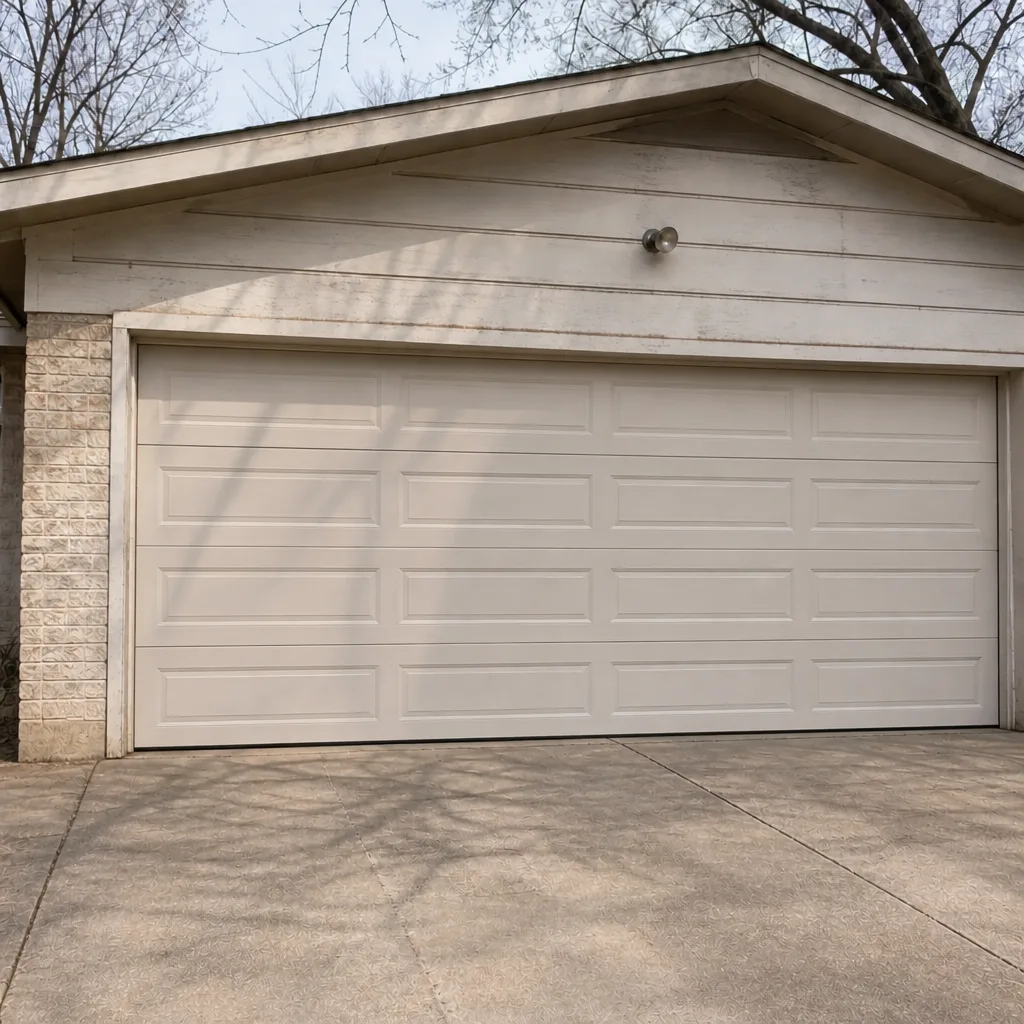 After
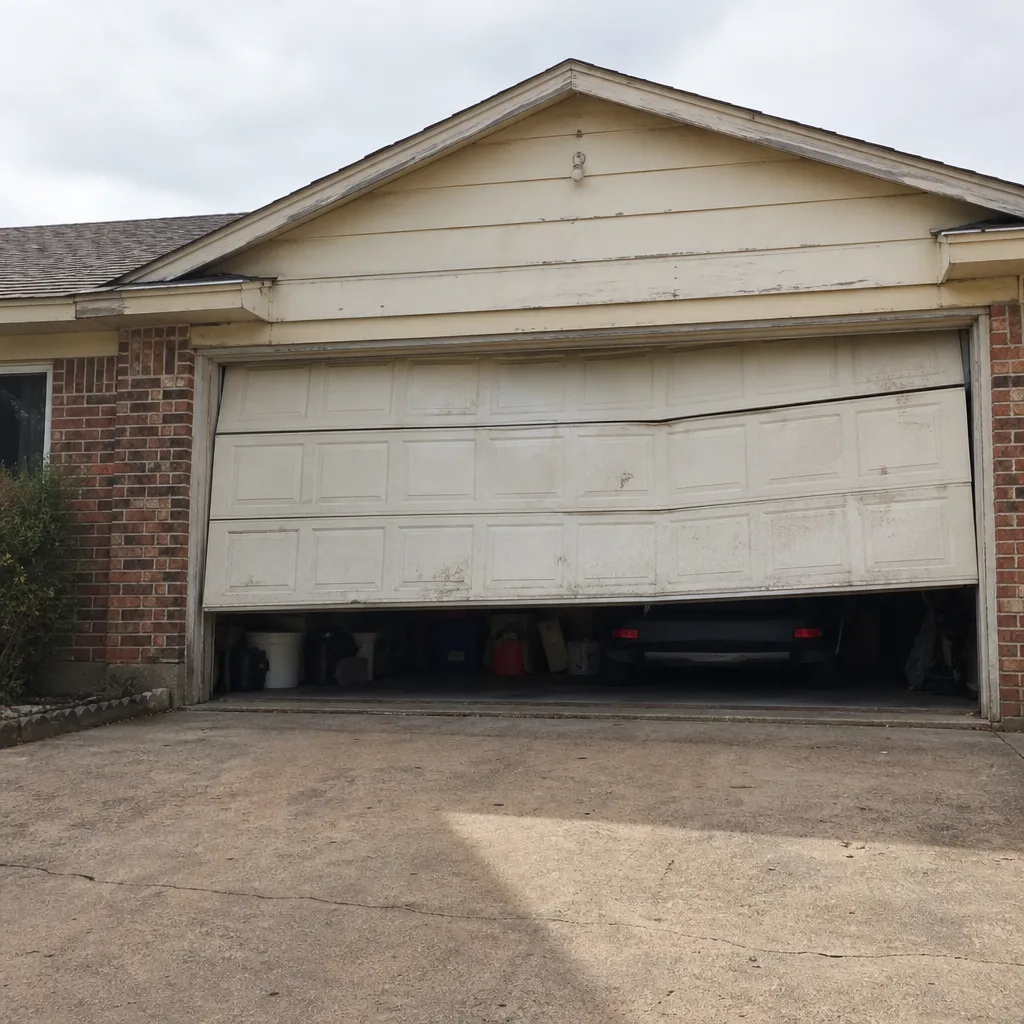 Before
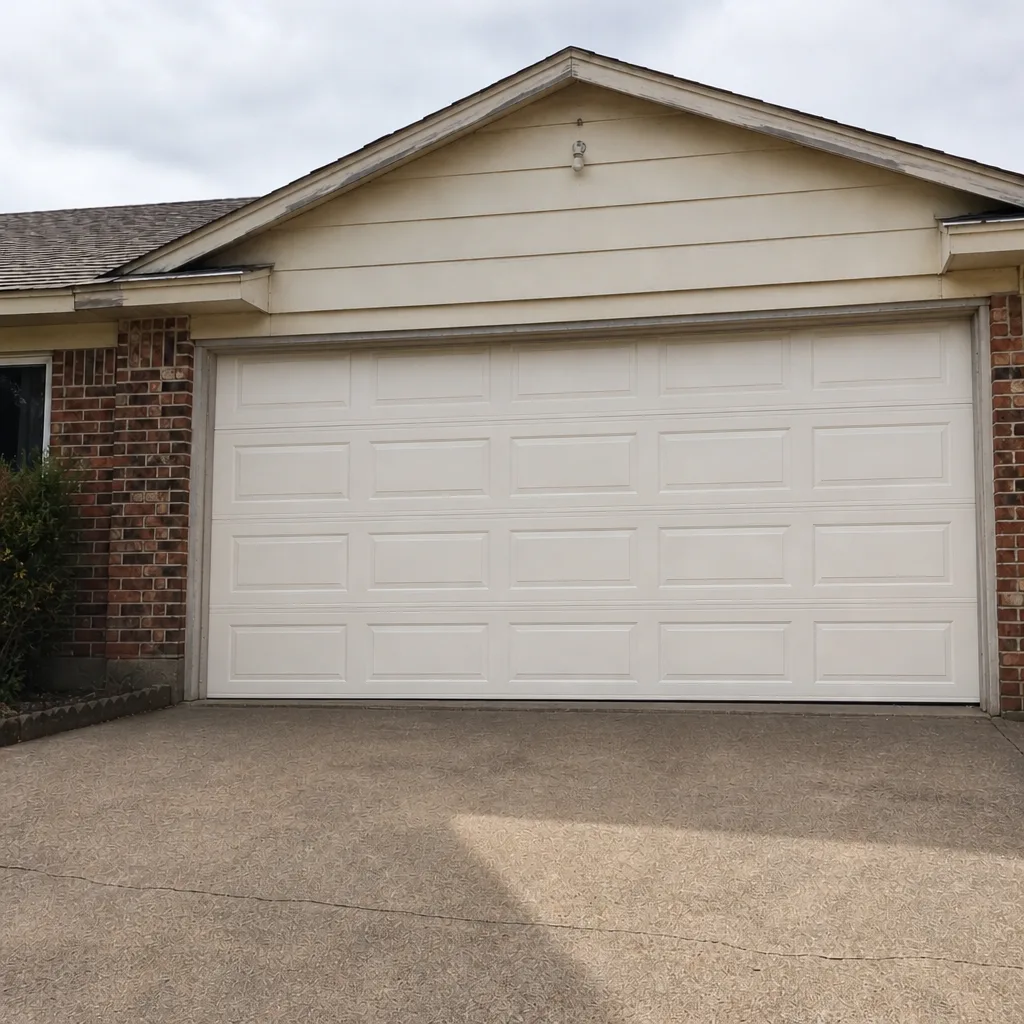 After
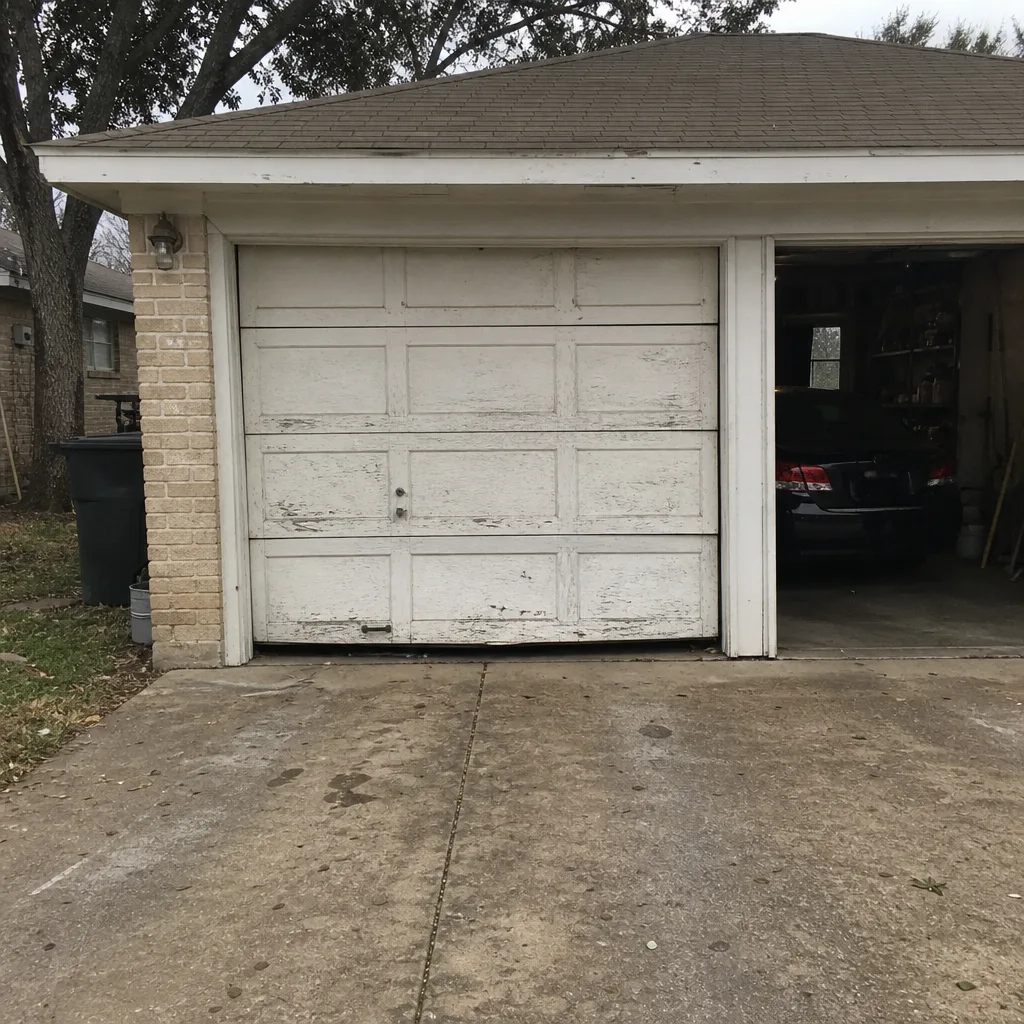 Before
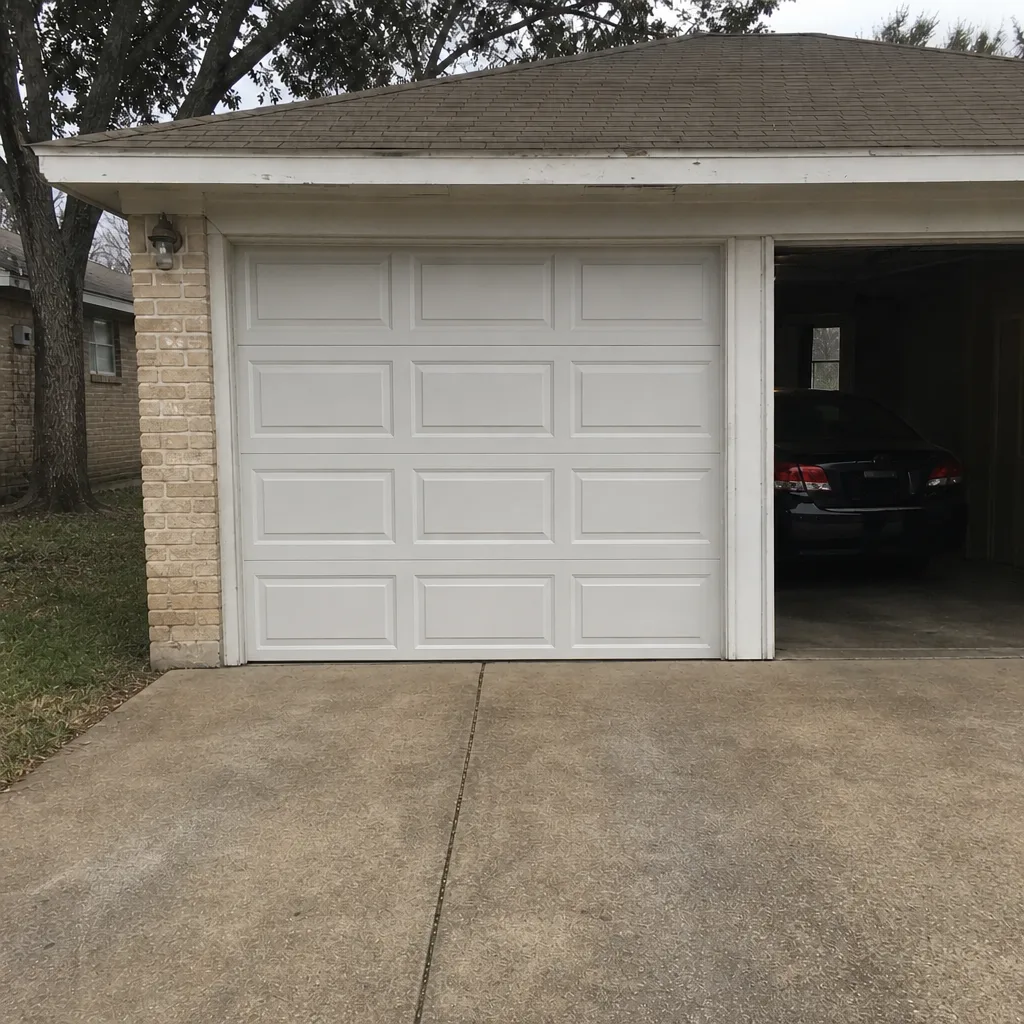 After
When to Call a Professional
Some jobs are worth a call. Call a professional when:
- A spring breaks or the door won’t lift by hand.
- A cable is frayed, loose, or has come off its drum.
- The door has pulled away from the tracks or is visibly crooked when closed.
- The opener runs but the door doesn’t move.
- The door reverses without hitting anything.
- A panel is visibly bent or the door sags at one corner.
- You’ve inherited a door and want to know its real condition before you rely on it.
For anything involving springs, cables, or high-tension hardware, stop and call – the injury risk is real, and a technician has the tools and safety equipment for the job. Hayden Garage Door Repair offers free estimates in Wichita Falls. Call (844) 524-5488. We answer 24/7. Fast dispatch from 7am to 7pm, Sunday through Friday.
Frequently Asked Questions
A well-maintained garage door typically lasts 20 years or more in this climate, though springs, rollers, and hinges wear out well before that. The heat and wind here speed up finish wear on steel and wood doors, so the maintenance schedule matters more than the material. If the panels crack, warp, or the hardware has been replaced piecemeal, replacement may beat repair. Call us for a straight assessment before you decide.
Repair is usually the better choice if the panels are intact and the problem is mechanical or electronic – a spring, a hinge, an opener. Replace only if the panels are warped or badly dented, the door is out of balance, or you’re facing multiple major repairs on the same door. In most cases, the door outlasts its hardware. A repair quote gives you the real answer. Call (844) 524-5488 for a free estimate.
Have a professional inspection every one to two years, and check the door yourself monthly. Local heat and wind make the seasonal checks worthwhile, especially before summer and after the windy spring. Between visits, lubricate the hinges, rollers, and spring shaft and watch for new noise or hesitation. Properly serviced, a door will run smoothly for its full lifespan.
An uninsulated garage on a west- or south-facing wall works like an oven in August. The heat stresses the opener, the finish, and the seals, and it’s the main reason a Wichita Falls opener wears out early. Insulating the door and improving ventilation helps, and choosing an opener rated for a hot garage helps more. If your opener is hesitating on hot afternoons, it’s likely the heat. Call us to diagnose it.
A full garage door installation is not a safe DIY job. The door is heavy, the springs and cables carry dangerous tension, and an improperly installed door is a real hazard to the car and the household. Save your effort for the routine maintenance – a professional install gets the door balanced and the springs rated correctly the first time. Call us for a written install quote.
First check the opener’s power and try the manual release cord on the rail. If the door lifts by hand, the door is fine and the opener is the issue; if it fights you, the problem is mechanical – often a broken spring. Don’t force it. If you’re unsure which one it is, call (844) 524-5488. We answer 24/7. A call outside dispatch hours is booked into the next opening, Sunday through Friday, 7am to 7pm.
The Bottom Line
A garage door is a mechanical system with a predictable lifespan, and the sooner you learn its parts, the less often you’ll be caught flat-footed. The key takeaways: know which part failed before you replace anything; choose door material for this climate, not for the showroom; size the opener for a hot garage; and plan replacement before failure. Every decision here is cheaper to make on your own schedule than under pressure. If you need a straight read on your system, the team at Hayden Garage Door Repair is a call away, and the estimate is free.
Call (844) 524-5488 for a free estimate. We answer 24/7. Fast dispatch from 7am to 7pm, Sunday through Friday, and we’re closed Saturday.
Written by the team at Hayden Garage Door Repair.