
Last updated November 15, 2026
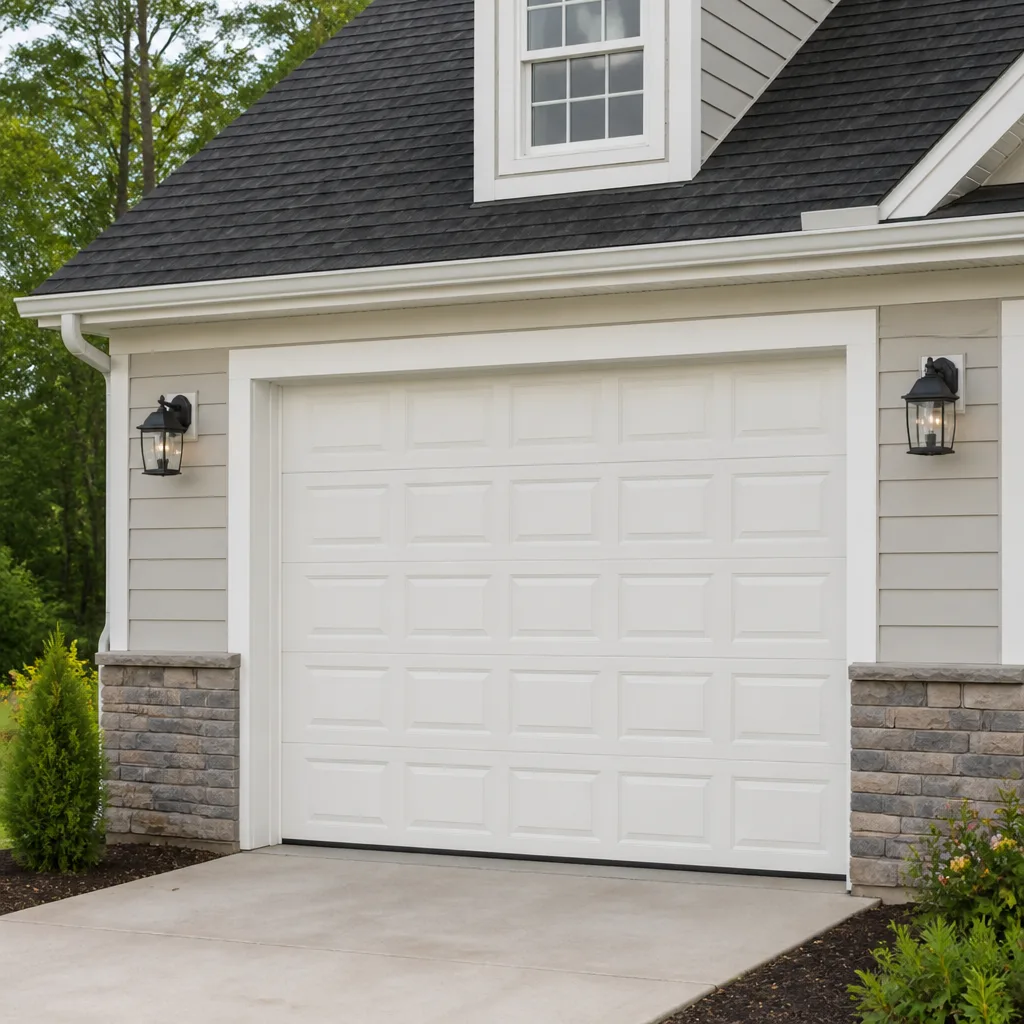 Raised-panel steel
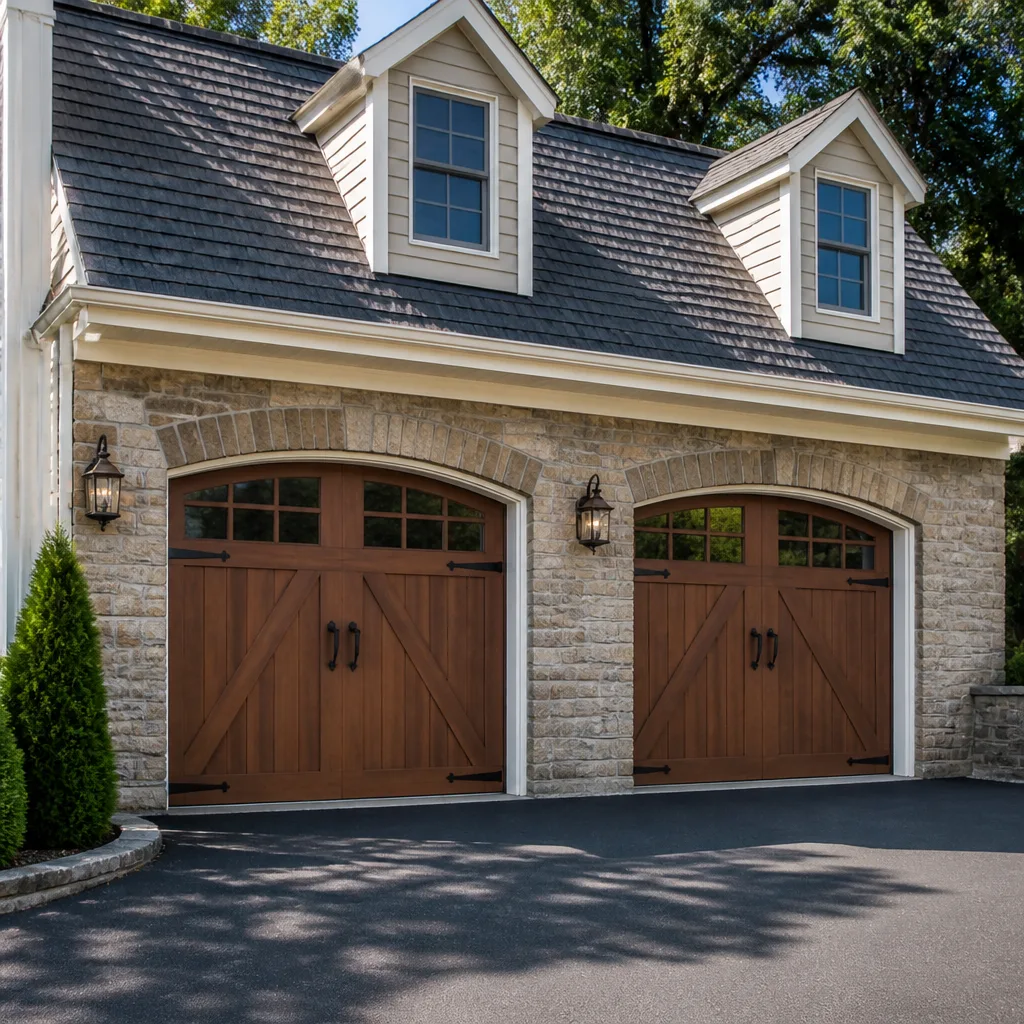 Carriage house
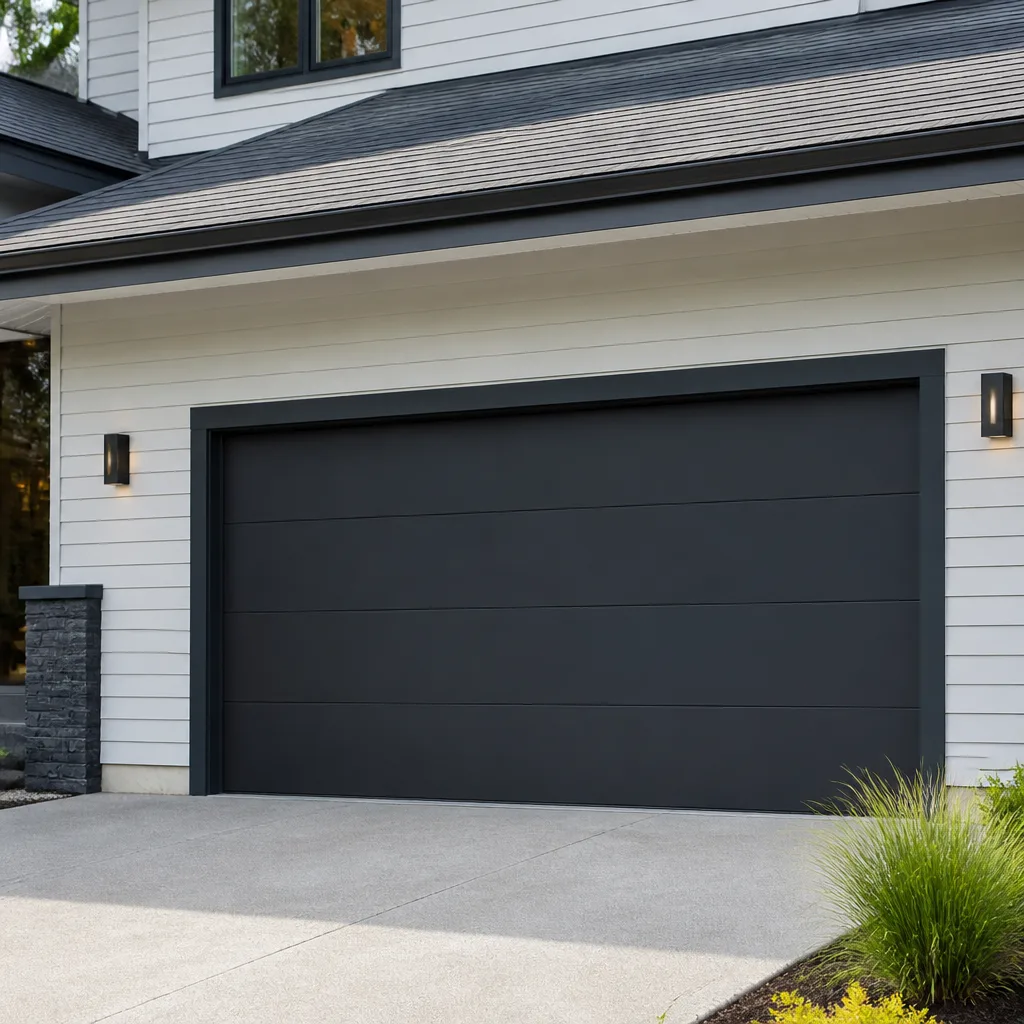 Modern flush
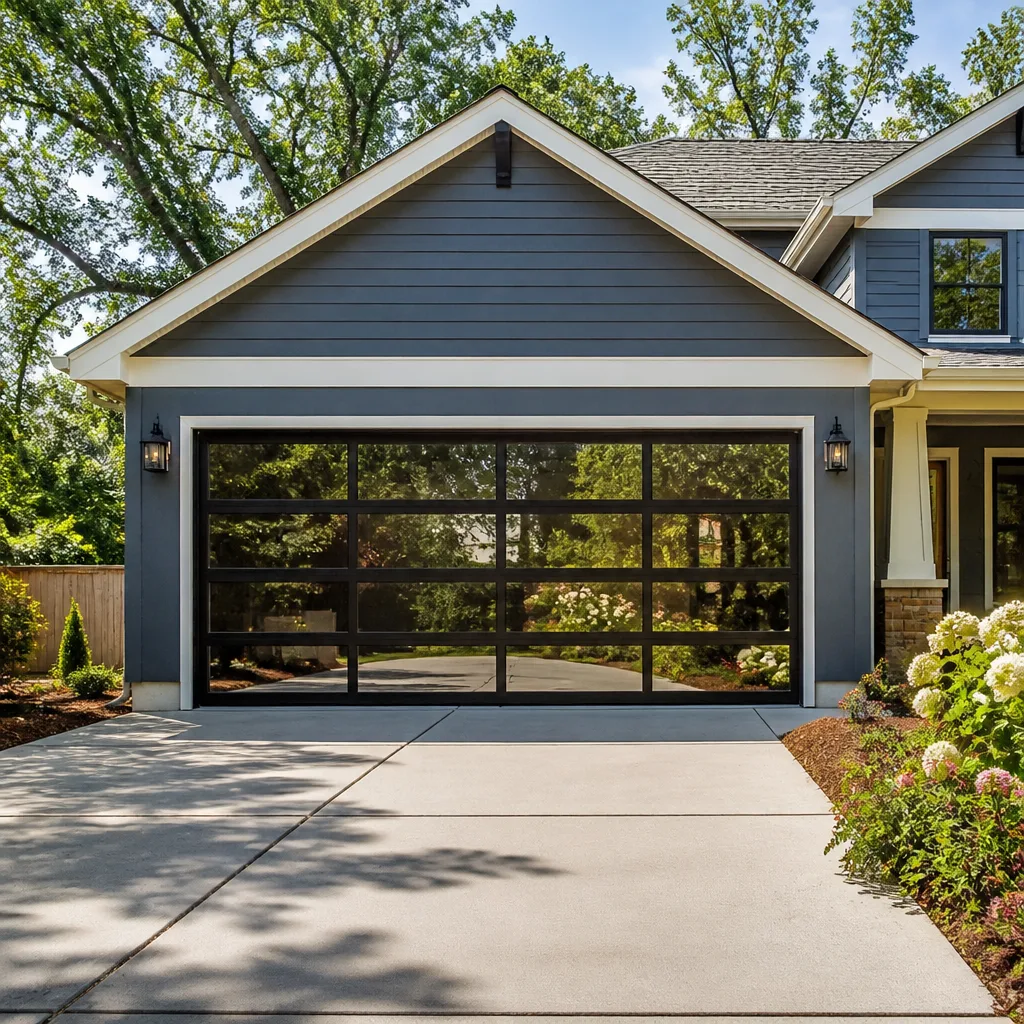 Full-view glass
 LiftMaster openers
 Chamberlain openers
Full 25-point door and opener safety check with every visit - springs, cables, rollers, tracks, and your LiftMaster or Chamberlain opener included
You get a price before we start. It does not change when the pro arrives.
Get your free estimateDIY vs Professional Garage Door: The Wichita Falls Homeowner’s Decision Guide
A garage door spring stores enough energy to break a wrist. That’s not a scare tactic – it’s a physics fact that determines where the DIY line actually sits. Most guides treat the DIY-or-pro question as a matter of confidence or budget. We see it differently. A garage door is a system with a handful of genuinely homeowner-safe tasks and a smaller number of jobs that no untrained person should touch, and the line between them almost never has anything to do with how handy you are. This guide draws that line precisely for Wichita Falls homeowners: what you can safely do yourself, what you shouldn’t, why spring tutorials on YouTube leave out the parts that matter, and how to tell whether a failed DIY attempt actually saved you anything.
Quick Answer
Homeowners can safely handle lubrication, photo-eye alignment, remote and keypad programming, and weatherstripping on their own. Torsion springs, cable replacement, and track realignment under tension are professional-only work because those parts hold stored mechanical energy that can cause serious injury. Anything involving those three components should go to a trained technician with the right tools, and a free estimate makes the decision easy to price out.
Styles & brands we work with
- Raised-panel steel
- Carriage house
- Modern flush
- Full-view glass
- LiftMaster openers
- Chamberlain openers
Table of Contents
- Why the DIY vs. Pro Decision Is About Physics, Not Confidence
- The Garage Door Tasks That Are Genuinely DIY-Safe
- The Tasks That Aren’t DIY, Ever
- Why Spring Replacement Videos Don’t Tell You the Whole Story
- How to Figure Out Whether a Failed DIY Attempt Saved You Money
- What to Do Before You Call a Technician
- Wichita Falls Summer Heat and Opener Troubleshooting
- Brand Familiarity and Why It Matters for Diagnosis
Why the DIY vs. Pro Decision Is About Physics, Not Confidence
A torsion spring on a standard residential door is wound under tension and held in place by a set of winding bars seated in the cone. That stored tension is what lifts a door that might weigh a few hundred pounds. When a spring breaks, the tension is released instantly. When someone tries to wind or unwind one without the right rods, the rod can slip and the spring can kick back with the full force of the wind still on it. This is the single most dangerous task in a garage.
When our technicians open a garage door panel, they’re working with parts that are either under tension or in the path of parts that are. Cable, drum, hinge, roller, and bracket work all have a kinetic-risk profile that a ladder and a few hand tools won’t change. That’s the reason garage door work is a licensed trade, and it’s the reason every state with licensing rules puts garage door repair under that umbrella.
For Wichita Falls homeowners, this matters because the volume of home garage doors in town is high and the age spread is broad. Doors installed decades ago still carry springs that have cycled thousands of times. A homeowner who has replaced every faucet in the house is still a beginner around a wound torsion spring. The decision guide, then, isn’t “do I feel comfortable.” It’s “what specifically am I being asked to touch.”
The Garage Door Tasks That Are Genuinely DIY-Safe
There’s a real list of things a homeowner can handle without turning the garage into a hazard. Here’s the short version before the detail:
- Lubrication: springs, hinges, rollers, and tracks. A garage door lube (not WD-40) is the right product.
- Photo-eye alignment: the two small sensors on the sides of the door opening, six inches off the floor.
- Remote and keypad programming: pairing a new remote or resetting a wireless keypad to the opener.
- Weatherstripping replacement: the rubber seal at the bottom of the door and the perimeter seal around the frame.
- Visual inspection: glancing at the springs, cables, and rollers once a month to catch visible wear.
Lubrication is the highest-value task on the list. A dry hinge or roller will start to chirp, and if it goes long enough the friction accelerates wear on the parts it touches. A thin coat of a dedicated garage door lubricant on the spring coils, hinge pivot points, and roller stems, twice a year, will quiet most noisy doors.
Photo-eye alignment is the single most common opener complaint we hear, and it’s also the most fixable. If the door reverses immediately on the way down, look at the two sensors. One of them has a small LED that should be steadily lit. If it’s blinking or dark, the two beams aren’t making eye contact. Move the sensor bracket until the light steadies, and try the door again. That fix takes two minutes and needs no tools beyond a screwdriver.
Weatherstripping is DIY-friendly with a caveat. The bottom seal is a slide-on or nail-on rubber strip and it’s forgiving. The perimeter seal around the frame gets fussier on doors that have settled, and if you find yourself prying on the door to get the seal in, stop – that’s the point where it stops being a homeowner job. Pro tip for Wichita Falls: after a windy dust season, clean the bottom seal of grit before you re-lube the door. Grit in the rubber is what makes it squeal.
The Tasks That Aren’t DIY, Ever
Three specific garage door jobs should never be attempted by a homeowner, no matter how much confidence or experience they bring to the project.
- Torsion spring replacement. The spring is under extreme tension and requires two winding bars, a specific winding sequence, and a controlled detensioning process. A wrong move can break a wrist or worse.
- Cable replacement. Cables are what transfer the spring’s tension to the door, and a cable under tension that snaps can whip with serious force. Cables also have to be re-tensioned properly after replacement or the door will bind.
- Track realignment under tension. If a track is bent while the door is still under spring tension, the door can come out of the track, buckle, or drop. Even minor realignment requires detensioning the springs first.
That’s not a complete list, but it covers the components with the largest risk. Other tasks that usually call for a technician include opener logic board replacement, limit switch adjustment on older openers, and any repair where the door has to come off the track to reach a damaged component.
The safety note here matters for a specific reason. When a garage door fails on a Saturday afternoon and the car is stuck inside, the temptation is to try the fix anyway. We get it. But the same energy that lifts the door is the energy that fails badly when a part is in the wrong place at the wrong moment. A trained professional with the right tools can diagnose and safely handle the problem. A homeowner with a socket set and a video tutorial cannot substitute for that.
Why Spring Replacement Videos Don’t Tell You the Whole Story
Search “garage door spring replacement” on any video platform and you’ll find dozens of tutorials that look straightforward. A guy in his driveway, a pair of winding bars, and a spring swap in under thirty minutes. What the videos leave out is nearly everything that makes the job safe.
The tool requirement is the obvious omission. Winding bars are not a standard hardware store item and not something the average homeowner owns. Substituting a screwdriver or a piece of rebar is exactly how people get hurt. But there are quieter omissions too:
- Spring identification. Torsion springs are matched to the door’s weight by wire gauge, inside diameter, and length. A video almost never shows the homeowner how to measure the door’s lift and pick the correct spring. Getting the wrong one is a mechanical fault waiting to happen.
- Controlled detensioning. Most videos show installation, not removal. Detensioning a wound spring safely is the harder half of the job and requires specific feel and technique.
- Cycle life. A replacement spring listed as high-cycle costs more than a standard one and lasts substantially longer. Tutorials rarely explain the tradeoff, so homeowners install standard springs and repeat the job sooner.
- What else to inspect while it’s apart. A spring doesn’t usually fail in isolation. Cables, drums, and bearing plates get checked at the same time by a technician because they wear together.
In our experience, the calls that come in after a failed DIY spring attempt almost always involve a door that’s now out of balance, a bent track from the door sitting unevenly, or a snapped cable that failed when the door came down. The original spring price is now a much bigger repair because the failure cascaded into the surrounding parts. The video didn’t mention that risk either.
When you do want to talk the job through, our garage door repair team handles spring, cable, track, and panel work across the system.
How to Figure Out Whether a Failed DIY Attempt Saved You Money
This is the question most homeowners skip, and it’s the one that changes the decision. The real math of a DIY attempt is not “how much did the part cost vs. how much would the technician have charged.” It’s the cost of the part, plus the cost of any second part the failed attempt damaged, plus the cost of a service call that now has more work to do, minus the value of your time. If that number is higher than the original professional quote, the DIY attempt did not save money.
A specific framework for calculating it:
- Start with the parts cost for the DIY attempt. That’s your baseline.
- Add the cost of any additional parts you’d need if the first attempt damages something adjacent. Springs often take cables with them, and a door that comes off its track can bend panels.
- Add the labor cost of the eventual service call, which is now doing more than the original job.
- Add the cost of the gap in coverage. If the door is a security barrier while it’s stuck open, that has a value too.
- Subtract the value of the hours you spent. Two weekend hours may be worth more to you than a professional repair.
- Compare that number against the original professional estimate.
The estimate from a technician is free and the price is quoted and agreed before any work starts, so you know exactly what a professional repair would cost before you decide. If the DIY path only wins when nothing goes wrong, and a spring or cable job can easily go wrong, the math almost never favors DIY on the high-risk components. It often does favor DIY on the four low-risk tasks – which is the entire point of drawing this line.
What to Do Before You Call a Technician
Homeowners who do a five-minute pre-check before calling in a technician get a faster diagnosis and a more efficient service visit. If the door is broken and stuck, do these checks first:
- Disconnect the opener. Pull the red manual release cord hanging from the opener rail. If the door lifts and lowers by hand smoothly, the problem is likely in the opener. If it still feels heavy or jammed, the problem is in the door.
- Look at the springs. A torsion spring that’s broken has a visible gap in the coil. An extension spring that’s broken will show a hanging wire stretch. Either one means the door is not safe to operate.
- Check the photo-eye light. Look at the sensors near the floor. If one LED is off or blinking, note it – that’s useful information for the technician.
- Test the wall switch and the remote separately. If the wall switch works and the remote doesn’t, the issue may be the remote or its battery. If neither works, it’s the opener or the power to it.
- Listen for the opener motor. If you hear the motor run but the door doesn’t move, the issue is the drive mechanism or the door’s balance. If the motor is silent, the issue is electrical.
- Write down the symptoms in order. When the issue started, what you noticed first, what you’ve tried. That’s the single most useful thing you can hand a technician.
Walk around to the opener unit and snap a photo of the model and serial tag. If it’s a Genie, LiftMaster, Chamberlain, or any of the major brands, that photo saves diagnostic time because the technician can look up the correct parts before the visit. A few Wichita Falls homeowners have their door and opener info saved to a phone note for exactly this reason.
Our garage door opener repair team has helped hundreds of homeowners walk through these checks. A two-minute pre-check on the front end can cut five minutes off the visit on the back end.
Wichita Falls Summer Heat and Opener Troubleshooting
Summer in Wichita Falls brings stretches of heat that hit 100 degrees and above, and the consequences for a garage door opener are not trivial. Electronics and motors run hotter, and a garage that faces the afternoon sun can get far hotter than the outdoor temperature because of the door’s surface area. Opener issues that only appear in July and August are common here, and they’re a legitimate homeowner troubleshooting area.
The most frequent heat-related complaints we see:
- Opener cuts out after a couple of cycles. The thermal protection kicks in on a hot motor. Give it fifteen minutes to cool, then try again. If it keeps happening, the opener’s motor may need to be checked.
- Remote loses range on hot days. Usually the remote battery or the receiver antenna position. A fresh battery and a re-angled antenna often solve it.
- Door reverses only in the afternoon. The photo-eye or the safety reverse sensitivity can shift with heat. A quick clean of the lenses and a sensor alignment fix usually helps.
- Grinding or straining sound on the door. Heat thins lubricant on rollers and hinges, which is why spring lubrication matters more here than in cooler climates.
The good news is that opener problems are usually more forgiving than door problems. A homeowner can safely test the remote battery, clean the photo-eye lenses, and try the wall switch vs. remote test without risk. The bad news is that if the door itself is binding in the heat – a track that’s warped slightly, a roller that’s seized – the opener is not the actual fault. Disconnect the opener, run the door by hand, and feel for a bind. If you feel one, stop testing and call in a technician for Wichita Falls door work.
Heat also accelerates wear on the opener’s drive gear and belt. If your opener is now making a sound it didn’t make a year ago, it’s worth a look before it fails on the hottest day of the year.
Brand Familiarity and Why It Matters for Diagnosis
The brand on your opener and the brand on your door tell a technician a great deal about the parts inside them. A Clopay door and an Amarr door are built to different tolerances and use different hinge and roller configurations. A LiftMaster opener and a Genie opener use different logic boards, different drive systems, and different limit switch designs. The technician who walks in already knowing those details is not going to spend the first twenty minutes figuring out what they’re looking at.
At Hayden Garage Door Repair, we’re familiar with the eight brands most Wichita Falls homes actually have: LiftMaster, Chamberlain, Genie, Clopay, Amarr, Wayne Dalton, Craftsman, and Raynor. That’s the box you’re likely standing next to, and it means our technicians can often diagnose the issue from the model info before they even arrive. We’re brand-agnostic – we work on the brand you already own rather than steering you toward a brand we’d prefer to install. If your system is a Wayne Dalton door on a Chamberlain opener, that’s the system we service.
That familiarity also shortens the conversation. When you describe a symptom – “the door goes down three feet and comes back up” – a technician who has worked on that opener family before knows exactly which sensors and settings to check first. Garage doors are all we do, and brand-specific knowledge is a big part of the reason our technicians move through repairs faster than a generalist would.
Our technicians have up to 10 years of experience across these systems. Fast diagnosis, right fix – and whether it’s the door, the opener, or both, one call covers it.
Common Mistakes to Avoid
- Substituting a screwdriver for a winding bar. A screwdriver handle is not designed to hold the winding cone. The shaft can bend or slip and the spring can kick back. It’s the most common serious-injury setup in the trade.
- Replacing a spring with the wrong size. Springs are matched to the door’s weight. An oversize or undersize spring will force the opener to fight the door and shorten its life. Check the door’s lift with a proper spring chart or a technician.
- Ignoring a photo-eye alignment problem. A door that reverses on its own is often a misaligned sensor, not a broken door. Wichita Falls summer sun and dust both throw off sensor alignment, and it’s a two-minute fix.
- Oiling the tracks. Tracks should stay dry. Lubricant in the track attracts dust and grit, and grit wears the rollers faster. Only lubricate hinges, rollers, and springs.
- Using WD-40 on the door. WD-40 isn’t a garage door lubricant. It’s a solvent with light oil that evaporates, and it can actually attract dust. Use a proper garage door lube.
- Forcing a stuck door. If the door won’t lift by hand after you’ve pulled the manual release, don’t keep pulling. That’s a symptom of a broken spring or a bound cable, both of which need a technician.
- Skipping the pre-diagnosis before the call. A homeowner who can’t tell a technician whether the door lifts by hand has handed the technician a slower visit, which usually means more cost. The five-minute check is worth it.
- Assuming the opener is the problem. Half the “opener issues” we’re called to are actually door issues. The opener just stops working because it can’t overcome a bound door.
See the difference
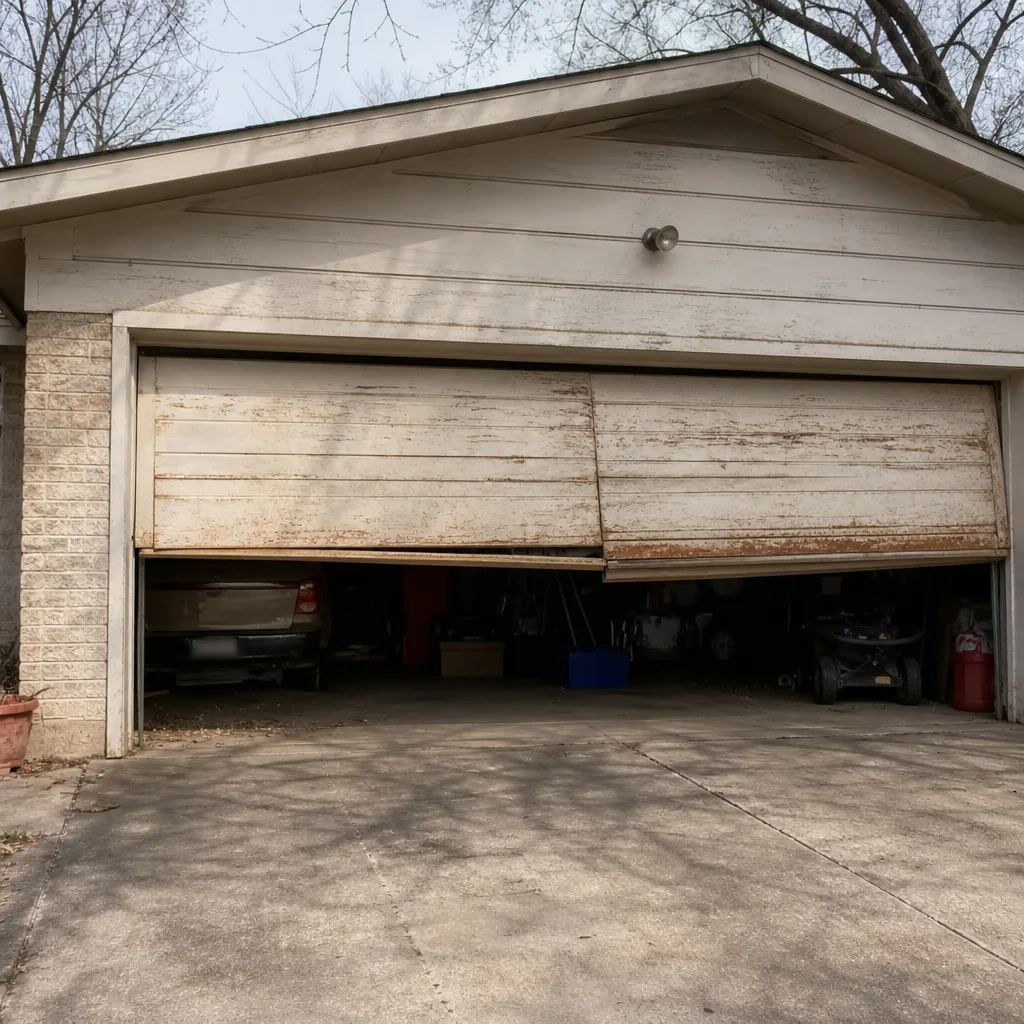 Before
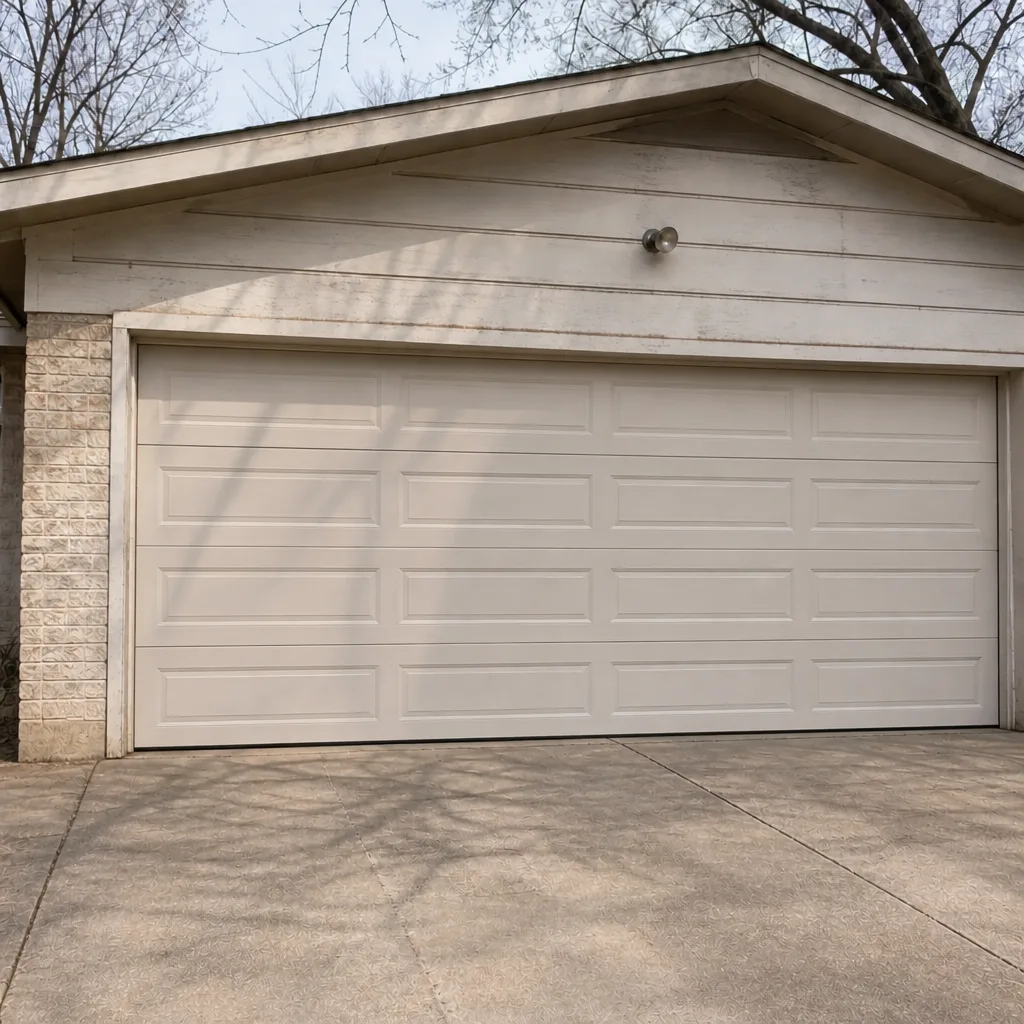 After
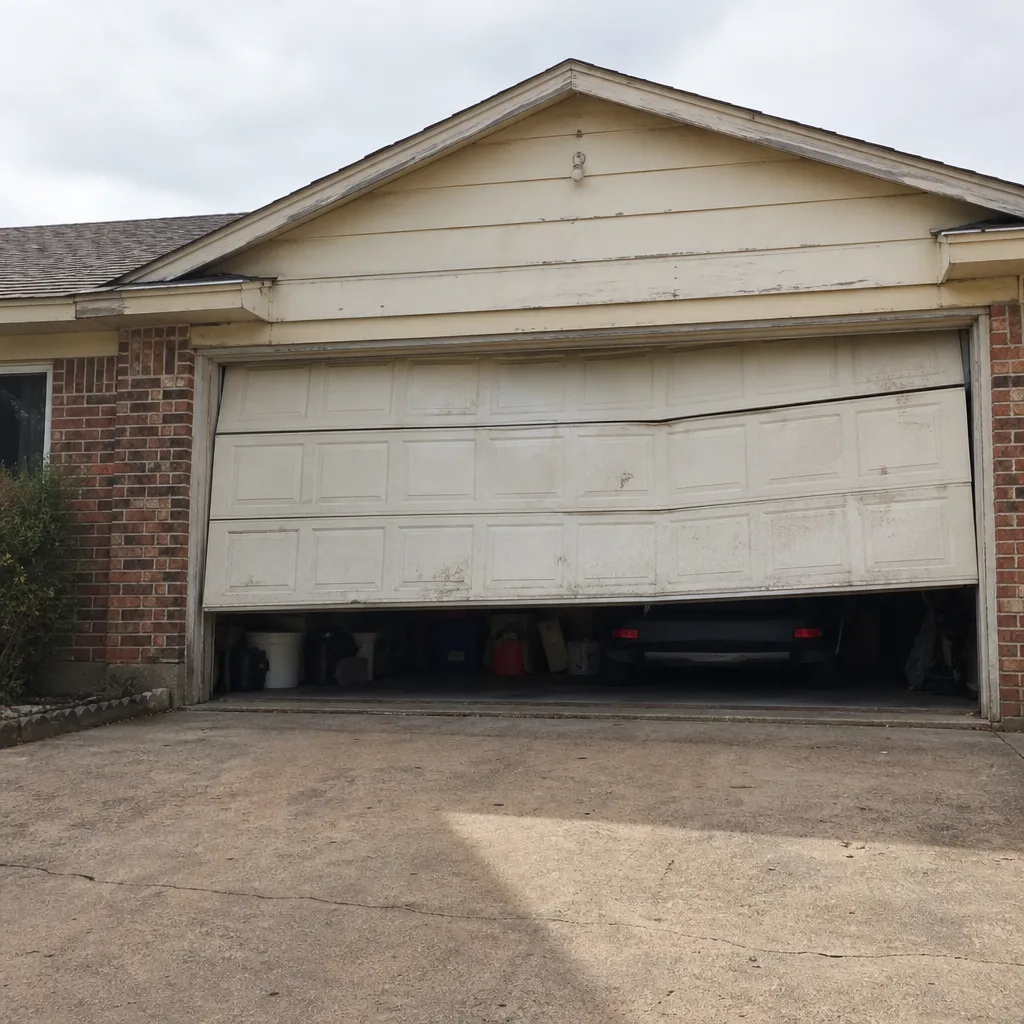 Before
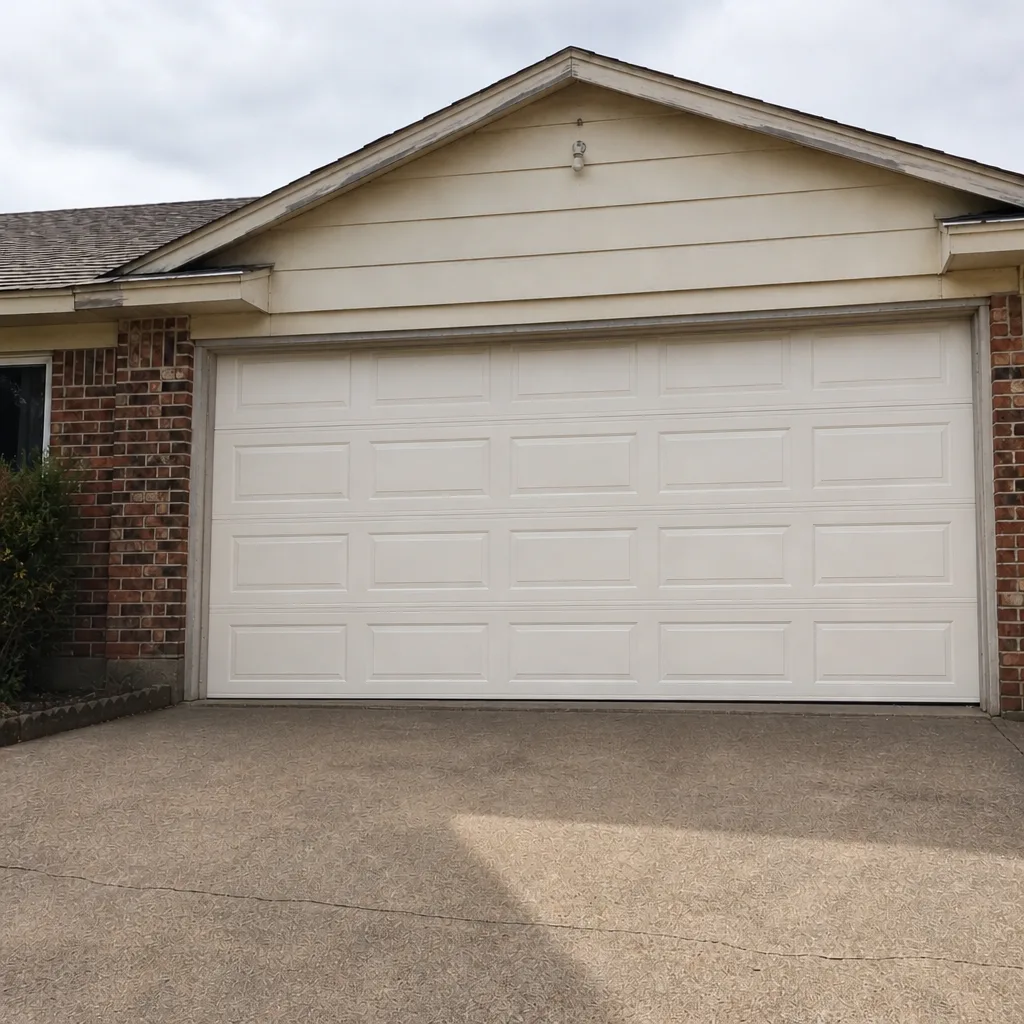 After
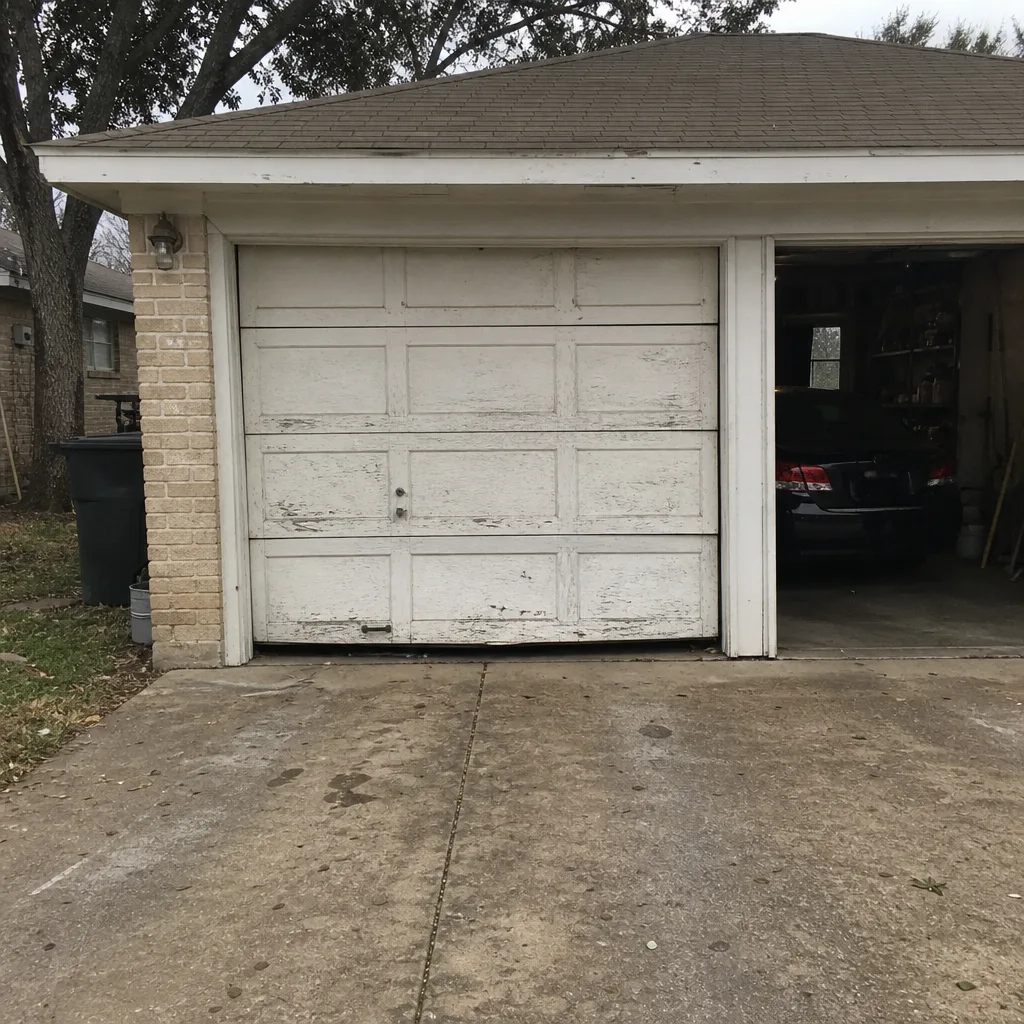 Before
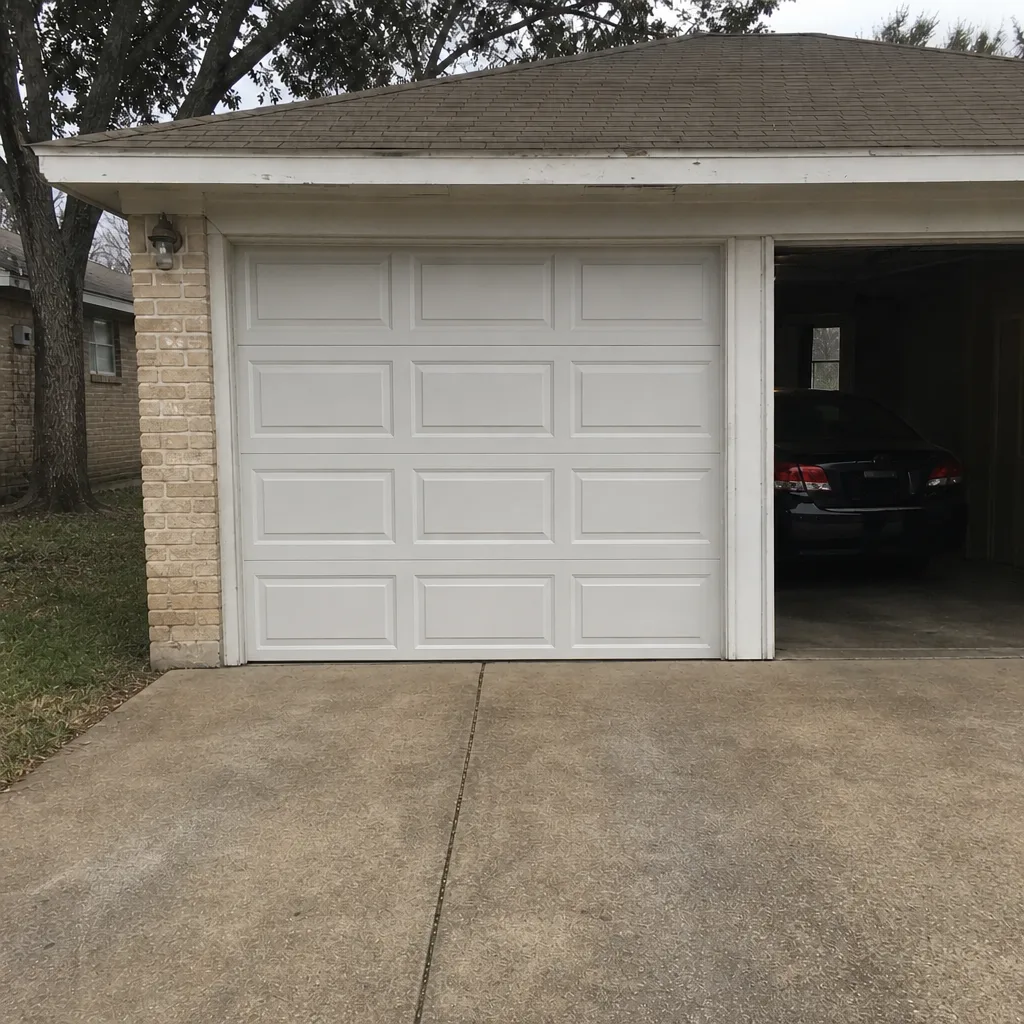 After
When to Call a Professional
Some jobs need a professional on the first call, not the second. Call in a technician if the door won’t lift by hand after you’ve pulled the manual release, if a spring has a visible gap in the coil, if a cable is hanging loose, if the door has come off one of its tracks, if you hear grinding from inside the opener housing, or if a homeowner has already tried a repair and the door still isn’t working. Those are all cases where a professional repair is the right answer, not a DIY attempt that’s just starting.
The other exception: if you’re replacing the door or the opener entirely, that’s a professional job with measuring, ordering, and installation steps that don’t belong in the DIY column. Our Wichita Falls installation work is measured, ordered, and scheduled rather than same-day, and we’ll walk you through the process from a free measure to a written price before anything is ordered.
Hayden Garage Door Repair offers free estimates in Wichita Falls. Call (844) 524-5488. We answer 24/7. Fast dispatch from 7am to 7pm, Sunday through Friday. The written estimate sets the final price, and it’s quoted and agreed before any work starts.
Frequently Asked Questions
No. Torsion spring replacement is one of the most dangerous tasks on a residential property because the spring holds stored energy that can cause serious injury during winding or detensioning. That’s the standard in Wichita Falls and everywhere else, and it’s the reason spring work is a professional-only job. Call (844) 524-5488 for a free estimate – the price is quoted and agreed before any work starts.
A single torsion spring repair typically runs $180-$340, and a matched pair is usually replaced together, so a pair costs about twice that single-spring range. The written estimate sets the final price, and it’s quoted and agreed before any work starts. Call (844) 524-5488 for an exact quote – estimates are free.
It reverses because the opener’s safety sensor sees an obstruction or an error, and the most common cause is a misaligned photo-eye. Look at the two sensors near the floor on each side of the opening. If one has a blinking or dark LED instead of a steady one, the two sensors aren’t lined up. Adjust the bracket until the light steadies and test the door. If that doesn’t fix it, call (844) 524-5488 – the issue could be the sensor wiring or the opener’s logic board.
Lubrication, photo-eye alignment, remote and keypad programming, and weatherstripping are all safe for a homeowner. Those tasks don’t involve springs, cables, or tracks under tension. Anything that does involve those components – spring replacement, cable work, track realignment – should go to a trained technician. Call (844) 524-5488 for a free estimate on anything you’re unsure about.
No. The price is quoted and agreed in a written estimate before any work starts, so you know the cost in advance. If a technician finds an additional issue during the visit, that’s discussed and quoted separately before any additional work is done. Call (844) 524-5488 for a free estimate – you’ll have a written number before you commit.
Yes. Licensed and insured is standard for professional garage door work. We work on the brand you already own – LiftMaster, Chamberlain, Genie, Clopay, Amarr, Wayne Dalton, Craftsman, and Raynor – and our technicians have up to 10 years of experience. Call (844) 524-5488 to schedule – estimates are free and there’s no obligation.
The Bottom Line
The DIY vs. professional decision on a garage door isn’t about skill or confidence. It’s about which specific parts of the door you’re touching. Lubrication, photo-eye alignment, remote programming, and weatherstripping are genuinely homeowner-safe and worth doing yourself. Torsion springs, cable replacement, and track work under tension aren’t, and no video changes that. If you do attempt a repair yourself, remember the math: a broken spring can take a cable with it, and the eventual service call will do more work than the original one. In Wichita Falls, the summer heat makes opener troubleshooting a reasonable DIY area, but the door mechanism itself usually calls for the trade. Fast diagnosis, right fix – and the free estimate makes the decision easier to price out.
Call (844) 524-5488 for a free estimate. We answer 24/7. Fast dispatch from 7am to 7pm, Sunday through Friday. The price is quoted and agreed before any work starts.
Written by the team at Hayden Garage Door Repair.