
Last updated November 15, 2026
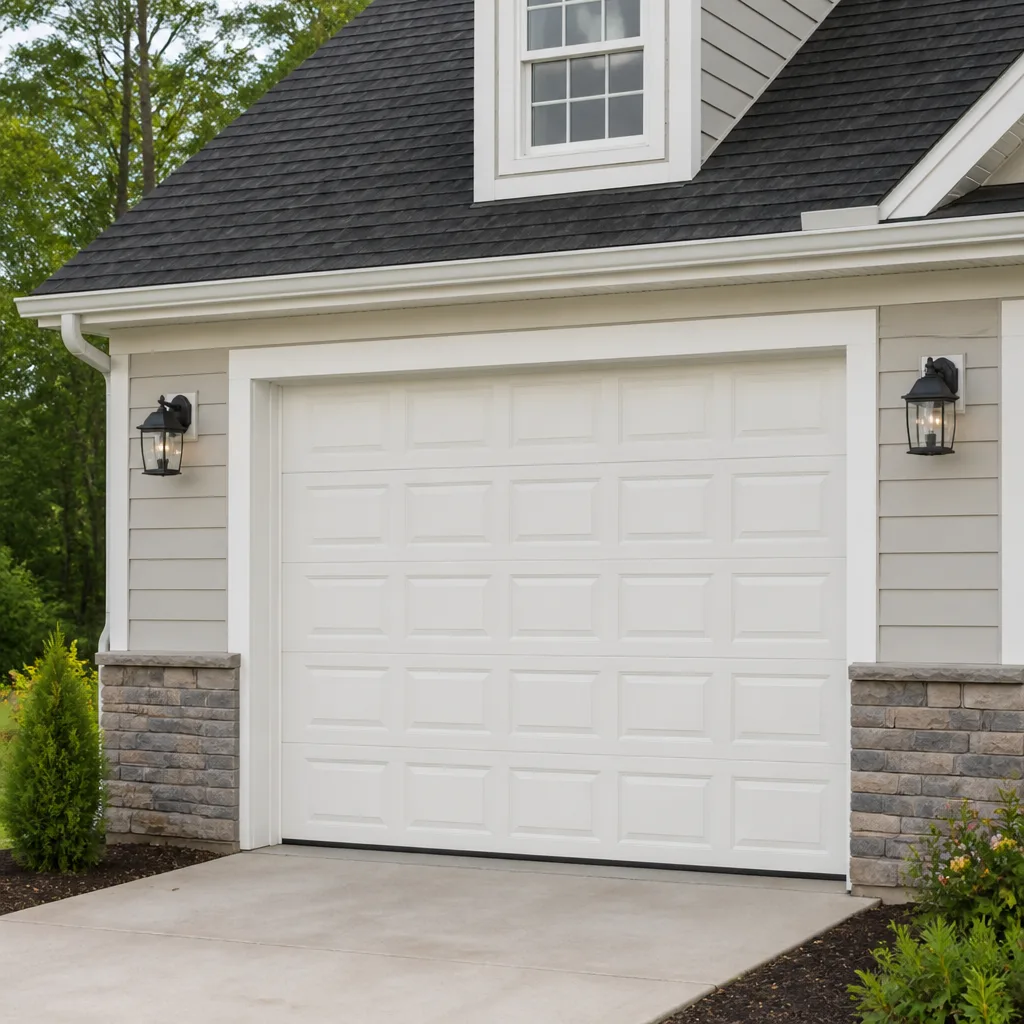 Raised-panel steel
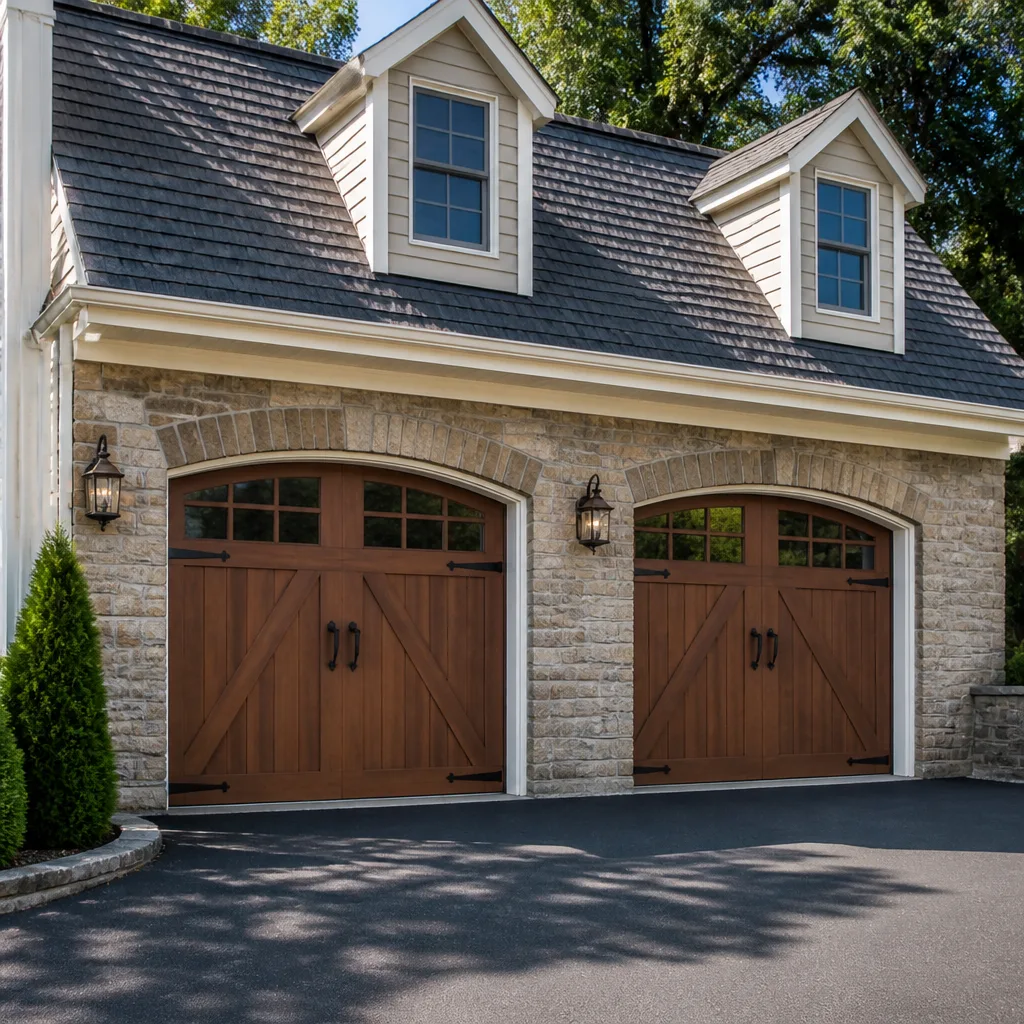 Carriage house
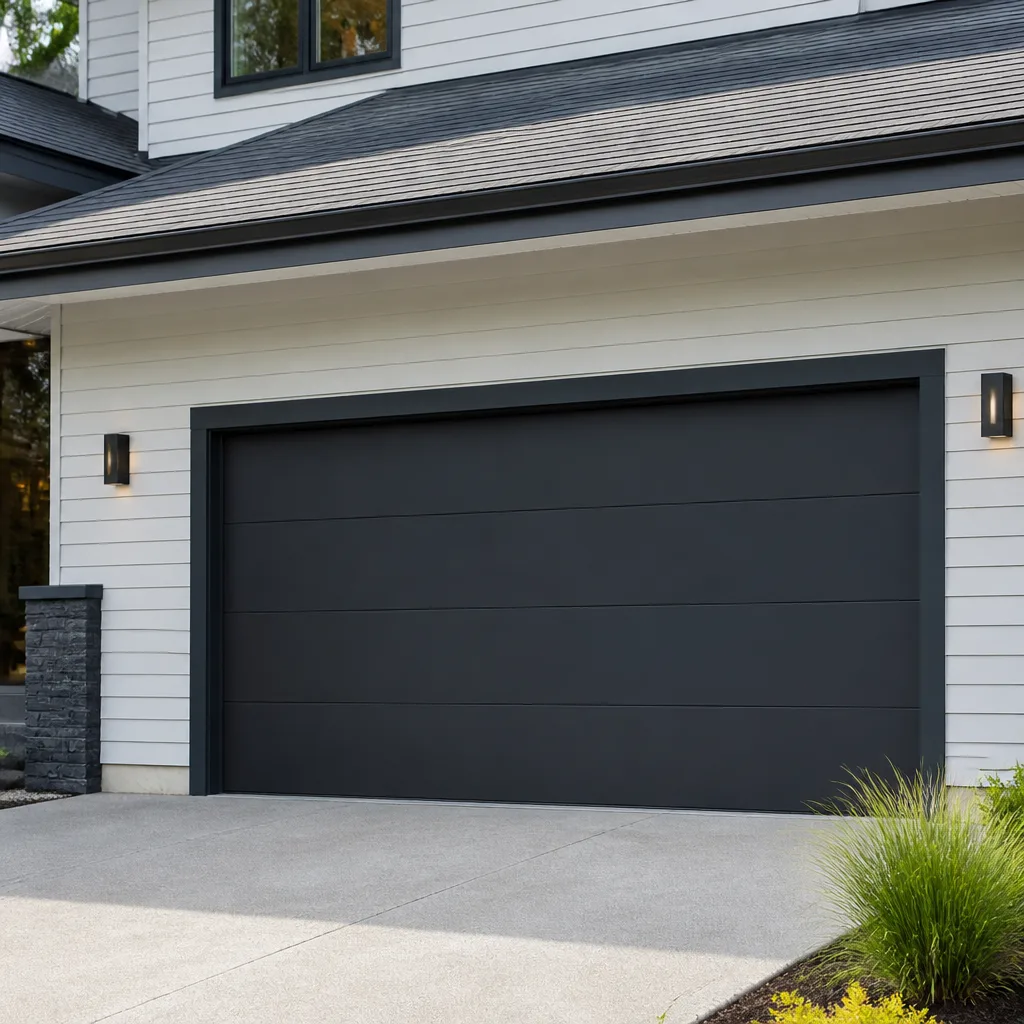 Modern flush
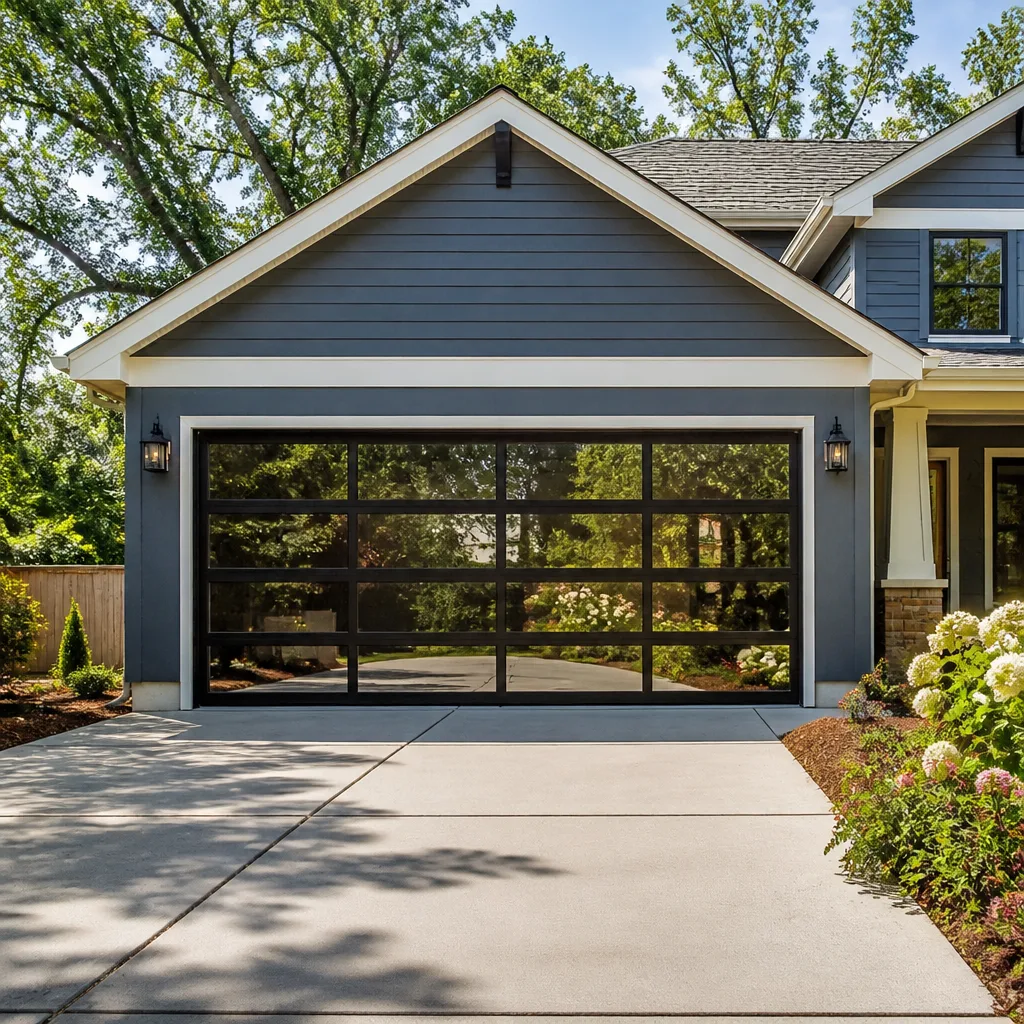 Full-view glass
 LiftMaster openers
 Chamberlain openers
Full 25-point door and opener safety check with every visit - springs, cables, rollers, tracks, and your LiftMaster or Chamberlain opener included
You get a price before we start. It does not change when the pro arrives.
Get your free estimateSeasonal Garage Door Care for Wichita Falls: Year-Round Homeowner’s Guide
The ice storm in February and the 108°F day in July are both attacking the same weatherstripping, just from opposite directions. Most seasonal garage door guides are written for a climate that doesn’t exist here. They talk about steady cold, gentle springs, and a tidy four-season rhythm. Wichita Falls doesn’t work that way. Our summers bake hardware for months on end, our ice storms arrive without much warning and leave behind days of hard freeze followed by a fast thaw, and the transition months stress seals and metal in opposite directions within the same week. What follows is a care plan built for the way doors actually age in Wichita Falls, not a copy-paste checklist from somewhere else.
Quick Answer
In Wichita Falls, seasonal garage door care centers on three things: heat protection before summer, seal and hardware attention before and after ice season, and a careful inspection every spring and fall that catches the cumulative wear a single hard freeze or hot spell won’t reveal. A thorough seasonal routine takes about an hour and covers lubrication, seal condition, panel gaps, opener behavior, and balance, and it’s the difference between a door that lasts and a door that fails mid-cycle on the hottest or coldest day of the year.
Styles & brands we work with
- Raised-panel steel
- Carriage house
- Modern flush
- Full-view glass
- LiftMaster openers
- Chamberlain openers
Table of Contents
- Why Wichita Falls Garage Doors Age Differently
- Pre-Summer Checklist: Heat, Panels, and UV
- Winterizing a Door That Freezes Hard but Rarely Stays Frozen
- Spring and Fall: What Actually Matters
- Protecting an Attached Garage from Temperature Transfer
- Spotting Seasonal Damage Before the Door Fails
- Building a Seasonal Care Calendar
- Brand-Specific Notes for Genie, Clopay, Amarr, and Wayne Dalton
Why Wichita Falls Garage Doors Age Differently
Most of Texas gets described as having hot summers, and most of it does. Wichita Falls sits in a part of North Texas where the summer heat is long and unforgiving, but the winter brings ice storms and stretches of hard freeze that many Texas homeowners don’t expect. It’s not steady cold and it’s not steady heat. It’s both, in alternating swings, and the door lives between them.
That combination is what wears out a garage door system faster than the calendar suggests. Steel panels expand in July and contract in January. Rubber seals soften in heat and stiffen in cold. Lubricant thin enough for summer can stiffen when the temperature drops, and grease thick enough for winter can drag on a track through a hot August. Opener motors fight against all of it, and their electronics are more sensitive to temperature than most people assume.
There’s a second factor that shows up in almost every Wichita Falls neighborhood, from the older homes near downtown to the newer subdivisions out toward the edges of town: the garage is attached, and it’s often the largest unconditioned room in the house. That means the door is doing two jobs. It’s a security barrier, and it’s the wall between 105-degree outdoor air and a house that’s trying to stay cool. The weatherstripping is where both jobs meet.
Here at Hayden Garage Door Repair, we work on garage doors and nothing else, so we see the same pattern over and over: doors that look fine in April and start showing problems in July because the seals were already worn in March. Seasonal care in Wichita Falls isn’t about waiting for a season to stress the door. It’s about getting ahead of the next transition before it does.
- Summer: thermal expansion, UV damage, opener thermal load, seal softening
- Winter: freezing seals to the floor, contraction, ice storm stress
- Spring and Fall: the two windows where most cumulative damage is done or caught
- Year-round: lubrication, balance, and opener behavior checks
Pre-Summer Checklist: Heat, Panels, and UV
Summer is the season that does the most invisible damage to a garage door in Wichita Falls. Nothing snaps, nothing falls, but by August the door has been quietly degrading for months. The pre-summer checklist is the one that pays you back the most, because the work you do in May or early June prevents the problems you’d otherwise discover in July.
1. Test the opener’s heat tolerance
Opener motors are rated for specific operating temperatures, and while most handle Wichita Falls heat without issue, an aging unit or one mounted in a garage that gets extreme late-afternoon sun can struggle. Run the door up and down a few times on a hot afternoon and listen. A motor that sounds strained, runs slower than usual, or stops partway is telling you something. LiftMaster and Chamberlain units often log a thermal fault before they fail outright, so the behavior change is your warning.
2. Check panel expansion gaps
Steel and aluminum panels expand with heat. The gaps and clearances between panels, and between the door and its frame, need room to move. If you see paint cracking along a seam, a panel that’s starting to bow, or a door that’s harder to close in July than in April, the panels are binding against something. That’s a cumulative problem, and left alone it stresses hinges and rollers.
3. Inspect the seals for UV degradation
Bottom seals and side seals are rubber or vinyl, and UV light breaks them down over time. Look for a seal that’s cracked, chalky, hardened, or starting to flake. A stiff seal stops conforming to the floor, which means it stops sealing, which means hot air gets in and cool air gets out all summer. Replacing weatherstripping before summer is one of the cheapest maintenance tasks you can do, and Clopay and Amarr both spec seal materials that hold up better in high-heat climates than older rubber formulations did.
4. Lubricate before the heat, not after
Track rollers, hinges, and springs all need lubrication, but the timing matters. Lubricant applied in cool weather will thin in the heat and migrate; applied too late, it won’t have worked into the joints. Early summer is the sweet spot. Use a lubricant made for garage door hardware, not general-purpose grease.
5. Clear debris and check the tracks
Spring wind and the first big rains bring grit into the tracks. Even a small amount of debris creates friction over the length of a track run, and friction in the heat compounds. Wipe the tracks clean and check that the door travels smoothly with no wobble.
If your door is already showing summer symptoms, a garage door repair visit in early summer will usually catch the small problems before they become a stuck door in August. The inspection itself is quick, and it’s a good time to walk the whole system before the hottest weeks arrive.
Winterizing a Door That Freezes Hard but Rarely Stays Frozen
Here’s where most seasonal guides get it wrong for Wichita Falls. They recommend the same winterization routine you’d follow in Minnesota: heavy insulating kits, deep freeze preparation, and the assumption that the door will sit in steady cold for months. That’s not what happens here. Our winters swing. A hard freeze can drop in overnight and be gone in two or three days, then return a week later. That swing, not the cold itself, is what causes the most damage.
A freeze-thaw cycle is harder on a garage door than steady cold. When the bottom seal freezes to the concrete floor and gets pulled loose the next time the door opens, that seal is now compromised. When water gets into a track joint and freezes, it expands, and when it thaws, it leaves a gap. Repeat that three or four times across a winter and you’ve got a door that wobbles, leaks air, or doesn’t close flush anymore.
What to do before the first freeze
- Inspect the bottom seal and threshold. Any crack, split, or hardened section is a place for water to collect and freeze. Replace it before the first hard freeze, not after.
- Clear the tracks of any debris. Small grit in a track becomes a frozen obstruction on the first cold night, and the door won’t travel past it.
- Apply a cold-rated lubricant. The lubricant that worked fine in summer can stiffen and drag at 20°F. A garage-door-specific lubricant rated for low temperatures will keep rollers turning.
- Check the door’s balance. If the door isn’t balanced, the opener is doing work the springs should be doing, and cold makes that worse. A well-balanced door moves easily by hand, and if it doesn’t, the springs need attention.
- Look for water intrusion points. Any place where water can get into the garage and pool near the door’s path becomes a freezing risk. Seal those before the first ice storm.
One thing worth being clear about: the springs on a garage door are under extreme tension, and adjusting them is dangerous. If testing balance reveals a spring problem, don’t attempt it yourself. Call a trained professional. We’ve seen too many injuries from homeowner spring work, and it’s a job that should never be a DIY project. Every Hayden Garage Door Repair visit includes a balance check specifically because it’s the root cause of so many other symptoms.
During an ice storm, resist the urge to force the door if it’s frozen to the ground. If the opener can’t lift it, stop and wait for the freeze to break rather than continuing to run the motor against a stuck door. That’s how opener gears get stripped and how doors get pulled off track.
Spring and Fall: What Actually Matters
Spring and fall are the two seasons where the door’s lifespan is decided, and they’re the two seasons most homeowners treat as non-events. In Wichita Falls, these transitions are where the damage from summer heat and winter freeze either gets repaired or accumulates.
What actually matters in spring
- Post-winter seal inspection. The ice storms are done, and any seal damage that happened over the winter is now visible. Catching it in March means you’re not carrying it into summer heat.
- Spring balance and spring check. Torsion and extension springs work hardest during the freeze cycles. Spring tension can drift, and a door that felt fine in December can feel heavy in March.
- Track alignment. Freeze and thaw can shift a track fractionally. A door that rattles slightly when it opens in spring is a door that’s riding on a misaligned track, and that friction will get worse through the summer.
- Opener load test. Run the opener with the door disconnected (the manual release) and check how smoothly it travels. If the opener runs hard with no door attached, that’s an opener problem. If it runs fine but the door drags, that’s a door problem.
- Bottom seal replacement window. Any seal that isn’t in good shape in spring should be replaced before summer, not after.
What actually matters in fall
- Panel condition review. A summer of heat and UV shows up in fall. Look for cracking paint, bowing panels, or seams that have started to separate.
- Pre-freeze seal inspection. The reverse of spring. Any seal that’s showing wear in October is a seal that’s going to fail in the first freeze.
- Lubrication refresh. Summer heat thins lubricant and drives it out of joints. Fall is the time to reapply before the cold arrives.
- Opener behavior review. A motor that struggled in the summer heat has been taking a beating. Fall is when the cumulative wear shows up.
What doesn’t actually matter in Wichita Falls: the “spring cleaning” of the garage itself, the annual coat of paint on the exterior panels (unless there’s visible wear), and anything involving snow. There’s very little snow here, and the snow-specific advice you’ll see in every seasonal guide is wasted effort in this climate. Our goal is to spend the maintenance hour where it counts.
Protecting an Attached Garage from Temperature Transfer
If you live in an attached-garage home in Wichita Falls and the garage shares a wall with your living space, the door is doing more than keeping your car inside. It’s the barrier between the biggest heat source in your house in summer and the cool air you’re paying for. A poorly insulated door transfers that heat straight into your home through the shared wall, and it costs you on the electric bill all summer long.
Insulation is where most garage door guides go wrong with R-values pulled from a climate zone chart. Those ratings assume steady conditions over a full year. Wichita Falls has a long hot summer and a short but genuinely cold winter, with transition months where the temperature swings by 40 degrees or more inside a week. The R-value that makes sense here is informed by that pattern, not by a generic chart.
What to look for in an insulated door
- Insulation type matters more than the number. Polyurethane insulation holds its thermal performance better than polystyrene at high summer temperatures, and it doesn’t degrade as quickly through repeated expansion and contraction.
- Full-door coverage. Some insulated doors have panels of insulation inside the door frame rather than across the full footprint. Panel-insulated doors are fine for some applications, but if your goal is stopping heat transfer from an attached garage, full-coverage insulation is more effective.
- Thermal breaks. Metal door frames conduct heat straight through. Doors with a thermal break between the inner and outer skin perform noticeably better in a hot climate, because they’re not actively conducting summer heat into the garage.
- Seal quality at the perimeter. Even a perfectly insulated door leaks heat through a bad bottom seal, bad side seals, and gaps at the top. The insulation is only as good as the seal around it.
If you’re considering a new door with better insulation, we install Clopay, Amarr, Wayne Dalton, and other brands, and we’ll talk through what makes sense for the way your home is actually built. Installation work is measured and scheduled, not a same-day drop-in, and the written estimate sets the final price. There’s no reason to accept a heat transfer problem through a shared wall if a properly insulated door will fix it. More on insulated options lives on our Wichita Falls service page.
Spotting Seasonal Damage Before the Door Fails
The most expensive garage door failures are the ones that were already there for months. Seasonal stress builds up in small increments, and a door that feels fine in March can fail in July because a hinge had been slowly working loose since the previous fall. Here’s what to look for.
The single most reliable warning is a change in sound. A garage door that used to open quietly and now rattles, grinds, or thumps is telling you that something in the system has moved. That rattle might be a loose hinge, a roller that’s come out of its track slightly, or a panel that’s started to bow. None of them are emergencies yet, but all of them get worse.
- A door that’s slower to open in summer. Either the opener is straining under heat, or the door has developed friction. Either way, the system is working harder than it should.
- A door that doesn’t close flush. A gap at the bottom on one side suggests the door has shifted, which usually traces back to a track or spring issue.
- A panel that’s starting to bow or crack. Heat expansion can reveal a weak panel, and a bowing panel stresses the hinges attached to it.
- A visible gap at a hinge or roller. Rollers wear, hinges loosen, and the gaps between them grow.
- Opener lights flashing a code. If you own a LiftMaster, Chamberlain, Genie, or Craftsman opener, the diagnostic light pattern is worth checking. It’s often the first sign the opener senses an overload it can’t handle.
- Random reversals. A door that reverses without reason in summer or winter is a door whose safety sensors are struggling with the temperature swing, or whose opener is forcing against friction.
- Rust forming in the tracks. Wichita Falls’s wet seasons and freeze-thaw cycles can leave water in tracks, and rust is friction waiting to happen.
If you’re seeing two or three of these at once, the cumulative damage is already there. A single service call can usually diagnose and correct the whole list, and it’s far cheaper than waiting for the door to fail mid-cycle. When the problem turns out to be the opener rather than the door, our garage door opener repair takes over from there, and either way you don’t need a second contractor.
Building a Seasonal Care Calendar
Here’s how we’d recommend a Wichita Falls homeowner structure the year. It’s not a lot of work, but the timing is what makes it effective.
- Early March (post-winter): Inspect bottom and side seals for freeze damage. Test the door’s balance by hand. Check tracks for alignment. Run the opener with the door disconnected to isolate any opener issue from a door issue. Replace any weatherstripping that shows wear before summer.
- Late May (pre-summer): Lubricate hinges, rollers, and springs with a garage-door-specific lubricant. Inspect panels for expansion gaps. Check the bottom seal for UV cracking. Test the opener on a hot afternoon and listen for strain.
- Mid-August (mid-summer checkpoint): Quick visual inspection. Anything that looked borderline in May and still looks borderline is now worth repairing. Look for new paint cracks along seams, which signal panel expansion issues.
- Early October (pre-freeze): Inspect seals again. Reapply lubricant rated for cold weather. Clear tracks. Check for water intrusion points. Verify the balance again before the first freeze.
- Once during the year, whenever it’s convenient: A full professional inspection catches what a homeowner routine can’t. Our technicians have up to 10 years of experience and check everything from spring tension to opener calibration.
Two things deserve repeating. First, if the door won’t move easily by hand with the opener disconnected, don’t force it. That’s a door that has a problem it’s not going to outgrow. Second, don’t touch the springs. They’re under tension that can cause serious injury, and spring adjustment is one of the few garage door tasks that should always be handled by a trained professional.
Brand-Specific Notes for Genie, Clopay, Amarr, and Wayne Dalton
Seasonal care looks slightly different across brands because each system is engineered with different priorities. We work on the brand you already have, and we’re factory-familiar with Genie, Clopay, Amarr, Wayne Dalton, LiftMaster, Chamberlain, Craftsman, and Raynor, so the seasonal notes below are specific to what we actually see.
Genie openers
Genie units tend to be sensitive to heat and to small track misalignments. If a Genie opener starts showing intermittent behavior in the summer, the first thing to check is the door’s balance and the track condition. Genie’s safety reverse technology can also get finicky when the sensors aren’t clean, which matters more in the fall when debris accumulates.
Clopay doors
Clopay’s insulated models use polyurethane construction that holds up well in high summer heat, but the hardware (hinges, rollers, springs) still needs the same seasonal lubrication and inspection as any other door. Clopay weatherstripping is generally good quality, but it still degrades in UV, so don’t skip the seal check just because the original seals were high-quality.
Amarr doors
Amarr’s steel doors are common in Wichita Falls neighborhoods and handle the local climate well, but steel panels expand and contract more than insulated composite panels. That means Amarr doors benefit more from the pre-summer expansion-gap check. A door that reveals a bowing panel in July usually showed an early sign of panel stress in May.
Wayne Dalton doors
Wayne Dalton’s torsion spring systems and panel construction are built for durability, but the springs still bear the seasonal freeze-thaw cycles. Balance checks in spring and fall are particularly important on Wayne Dalton doors, and the bottom seal is the other wear point to watch, especially if the seal is original to the door.
Common Mistakes to Avoid
- Following a guide written for a different climate. Most seasonal garage door advice assumes steady cold or steady heat. Wichita Falls has both, in a pattern that breaks most of the standard recommendations, and following them wastes your maintenance hour on the wrong task.
- Waiting for the door to fail before calling anyone. A rattle, a slow opener, a gap at the bottom, these all have a repair cost today and a larger repair cost after a mid-cycle failure. The failure almost always happens in the middle of a heat wave or an ice storm, exactly when you need the door to work.
- Oiling the tracks. The tracks should be clean and dry; lubrication belongs on the rollers, hinges, and springs. Oil on the tracks attracts dust and creates a paste that fights the rollers.
- Ignoring the seals until they’re visibly bad. By the time a bottom seal is cracked, it’s been leaking hot or cold air for months. Inspect it in spring before the heat and in fall before the freeze.
- Adjusting springs yourself. This is the one mistake that can cause serious injury. Springs are under high tension, and any adjustment is a job for a trained professional.
- Assuming a hotter, longer summer doesn’t affect hardware. Wichita Falls summers put opener motors and panel joints through more cumulative thermal load than other regions of the state, and the wear is invisible until it isn’t.
- Skipping the fall lubrication before the freeze. The lubricant that worked fine in July may be too thick for a 20°F morning, which produces a door that drags and stresses the opener through the winter.
See the difference
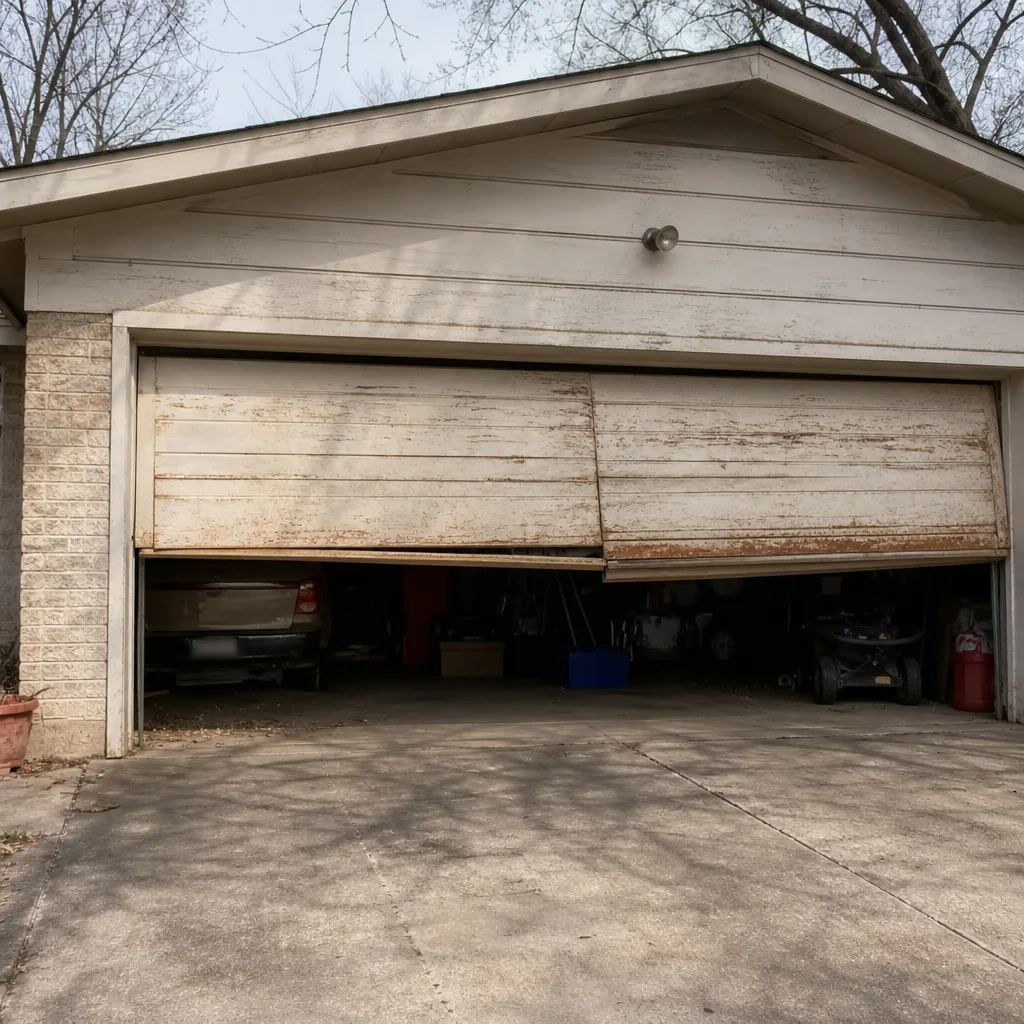 Before
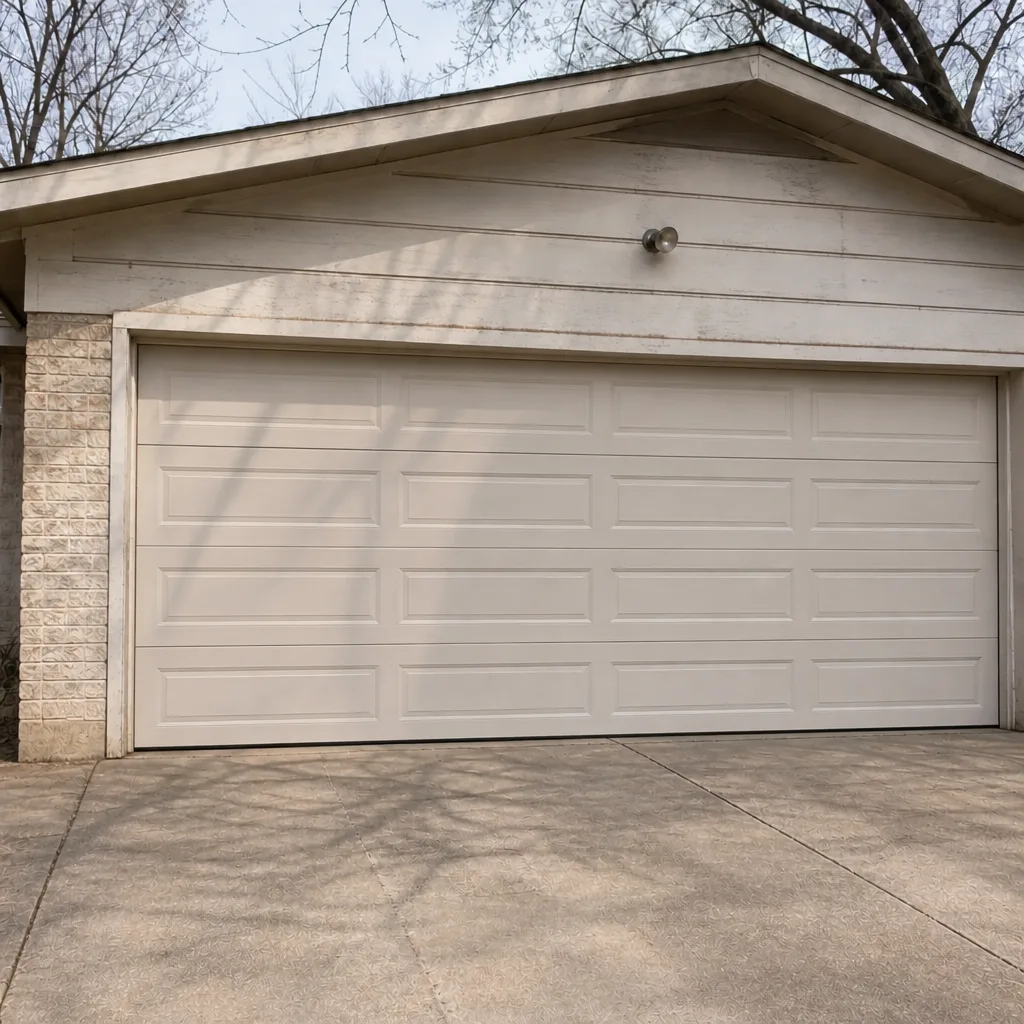 After
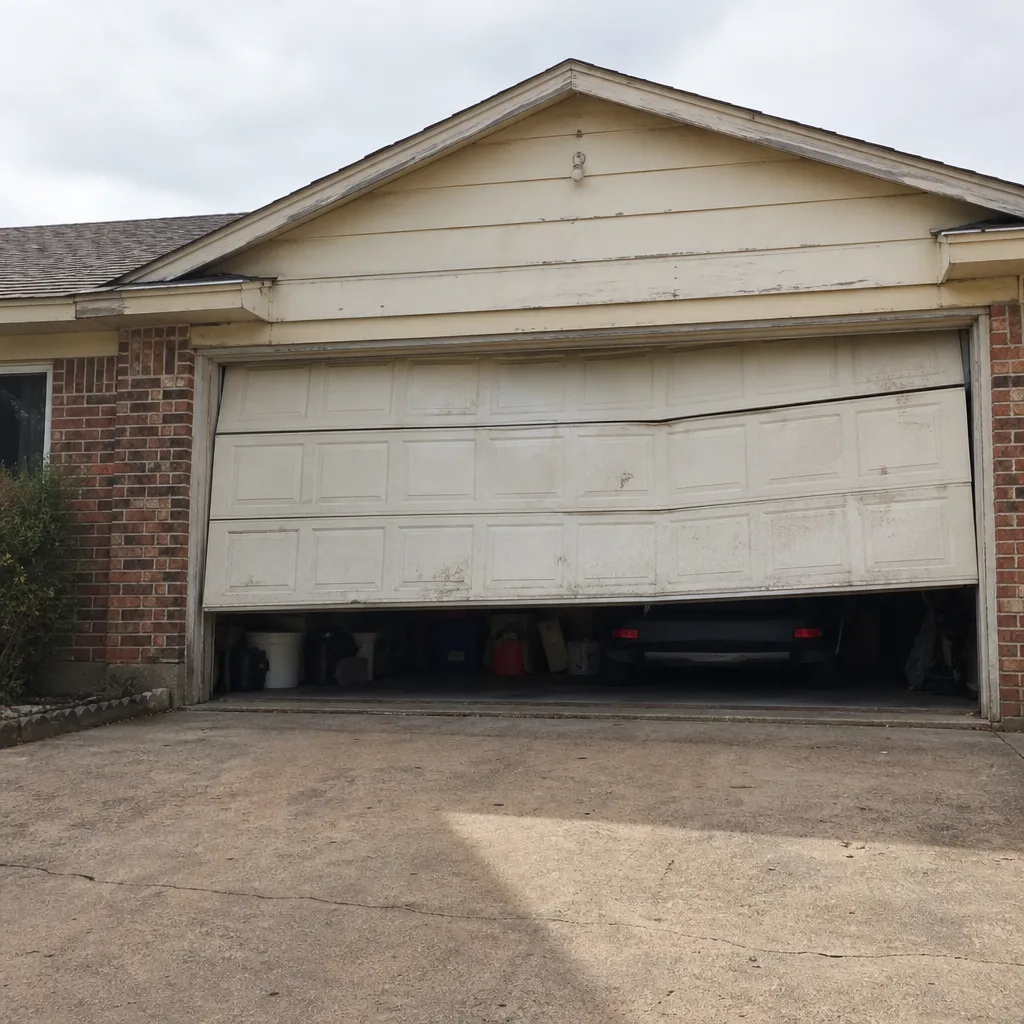 Before
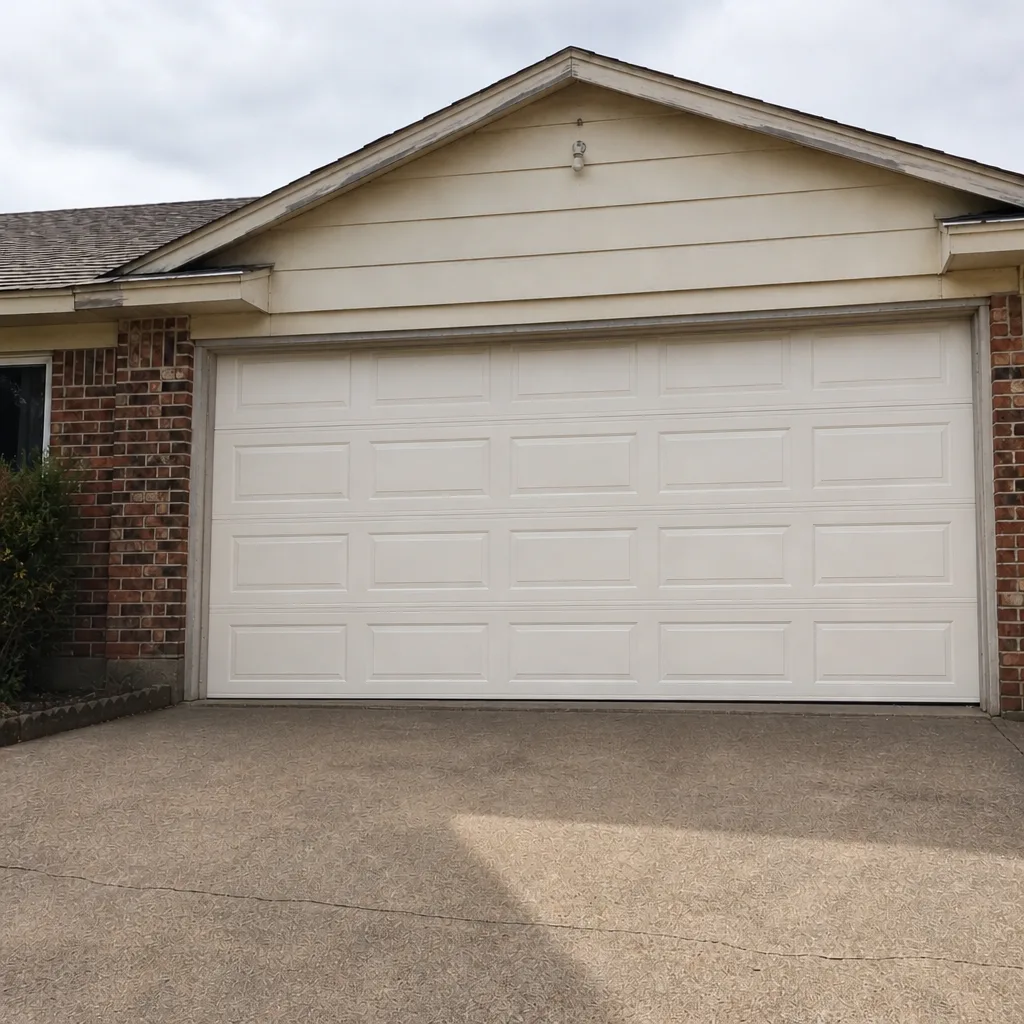 After
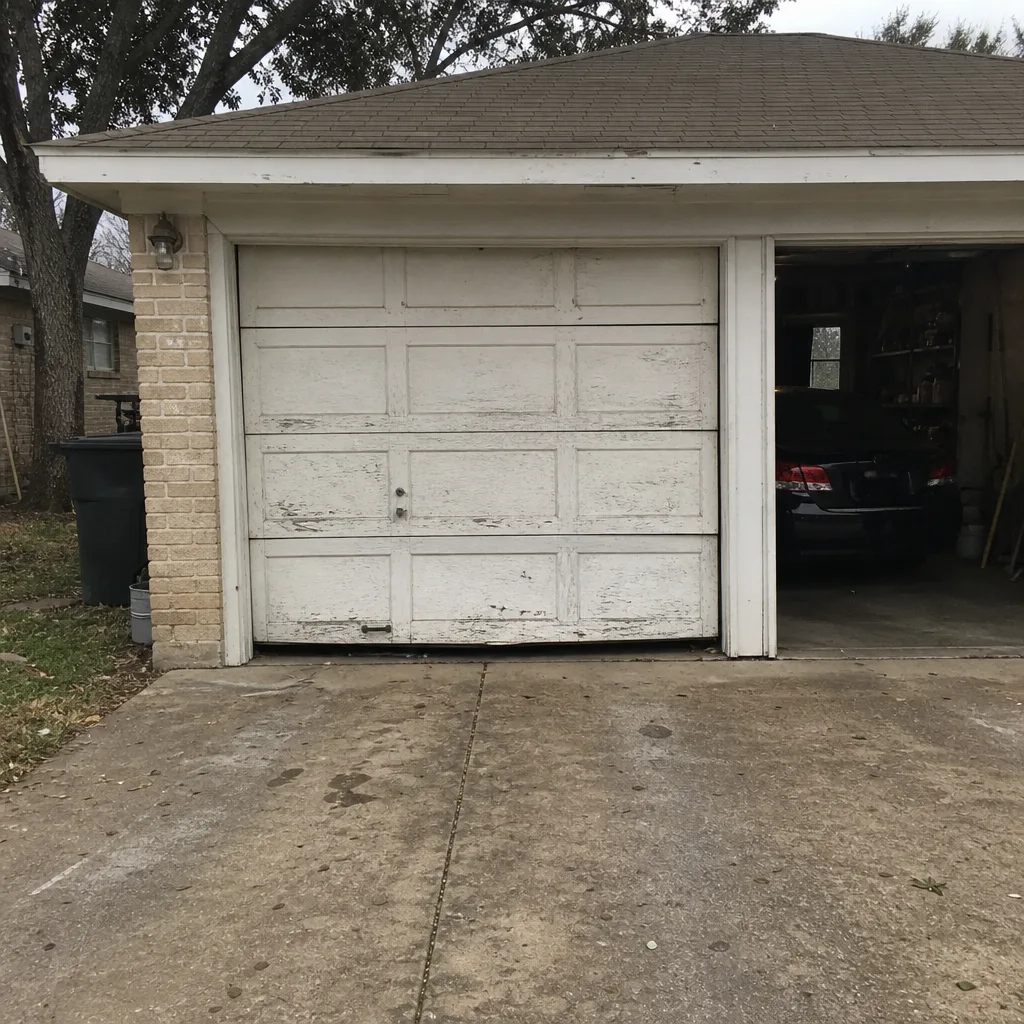 Before
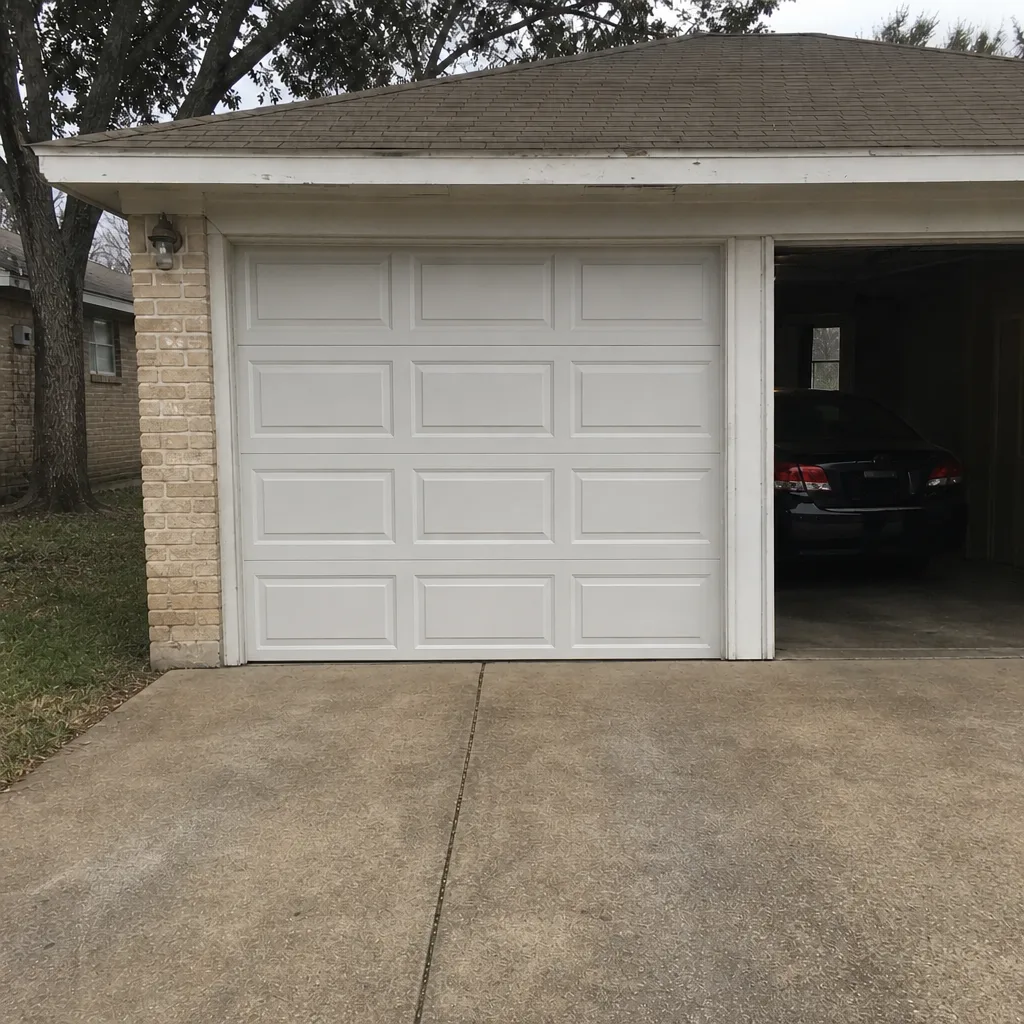 After
When to Call a Professional
Call a professional if the door won’t move by hand when the opener is disconnected, if you see spring damage (a visible gap in the spring coil, a broken spring, or a door that lifts a few inches and stops), if the door comes off its track, if the opener runs but the door doesn’t move, or if you’re seeing the cumulative warning signs from this guide all at once. Those are situations where the repair is more than maintenance, and every hour the door runs under a fault adds to the damage.
For seasonal inspections, we can help with that too. Hayden Garage Door Repair offers free estimates in Wichita Falls, we work on the door and the opener under one company, and we’re the same people you’d call if the door ever does fail. Call (844) 524-5488. We answer 24/7. Fast dispatch from 7am to 7pm, Sunday through Friday.
Frequently Asked Questions
Twice a year for a homeowner-level inspection (spring and fall) and once a year for a professional check. The spring and fall timing matters more in Wichita Falls than in most climates because the freeze-thaw cycles here do the most damage at the transitions, not during the extremes. If you want to simplify it, book the professional inspection in early spring, right after ice season ends.
Yes, but the damage is cumulative and quiet. Heat expands steel panels, degrades UV-exposed seals, and loads the opener motor for months at a time. Nothing snaps in a single hot day, but by the end of the summer the door has been through more thermal cycling than a similar door in a milder climate. That’s why lubrication before the heat and expansion-gap checks in late spring matter so much.
No. Run the opener once, and if the door doesn’t lift, stop and wait for the freeze to break. Forcing it pulls the seal loose, strains the opener gears, and can knock the door off track. If the door’s frozen for more than a day and you need it working, we can help. Call (844) 524-5488, and if your call is outside dispatch hours, it gets booked into the next opening, Sunday through Friday, 7am to 7pm.
For an attached garage that shares a wall with the living space, yes. A properly insulated door with a thermal break between the panels slows heat transfer through the shared wall, which takes a load off your home’s cooling system. Polyurethane insulation and a full-coverage design matter more than a single R-value number in a climate with a long, hot summer.
Spring maintenance focuses on recovering from freeze damage and prepping for heat, while fall maintenance focuses on recovering from heat damage and prepping for freeze. The spring tasks are balance, seal inspection, and track alignment. The fall tasks are panel condition review, seal reinspection, and cold-rated lubrication. Both include a full-door check, but the emphasis is on opposite ends of the thermal cycle.
Both, but usually in that order. A door that develops friction from seasonal damage makes the opener work harder, and the opener is the component that eventually gives out first. That’s why our seasonal inspections look at the door and the opener as one system. If the door and the opener are both aging out at the same time, replacing the door without addressing the opener just moves the problem.
The Bottom Line
Wichita Falls garage doors experience a tougher climate than the seasonal guides suggest. Long, hot summers load hardware for months. Ice storms and hard freezes interrupt the heat with short, sharp cold snaps that do the most damage at the transitions. The care plan that actually works here centers on three seasonal checkpoints (pre-summer heat prep, pre-freeze seal and lubricant prep), catches cumulative damage early by watching for the small warning signs, and treats the door and the opener as a single system. That last point matters, because very few garage door problems are truly one or the other. Garage doors are all we do, and the fastest way to keep a door working through all of it is a proper seasonal routine, plus a call to a specialist when something looks off. If you want a second set of eyes on the door before the next season arrives, call (844) 524-5488 for a free estimate. We answer 24/7 and dispatch from 7am to 7pm, Sunday through Friday.
Written by the team at Hayden Garage Door Repair.