
Last updated November 15, 2026
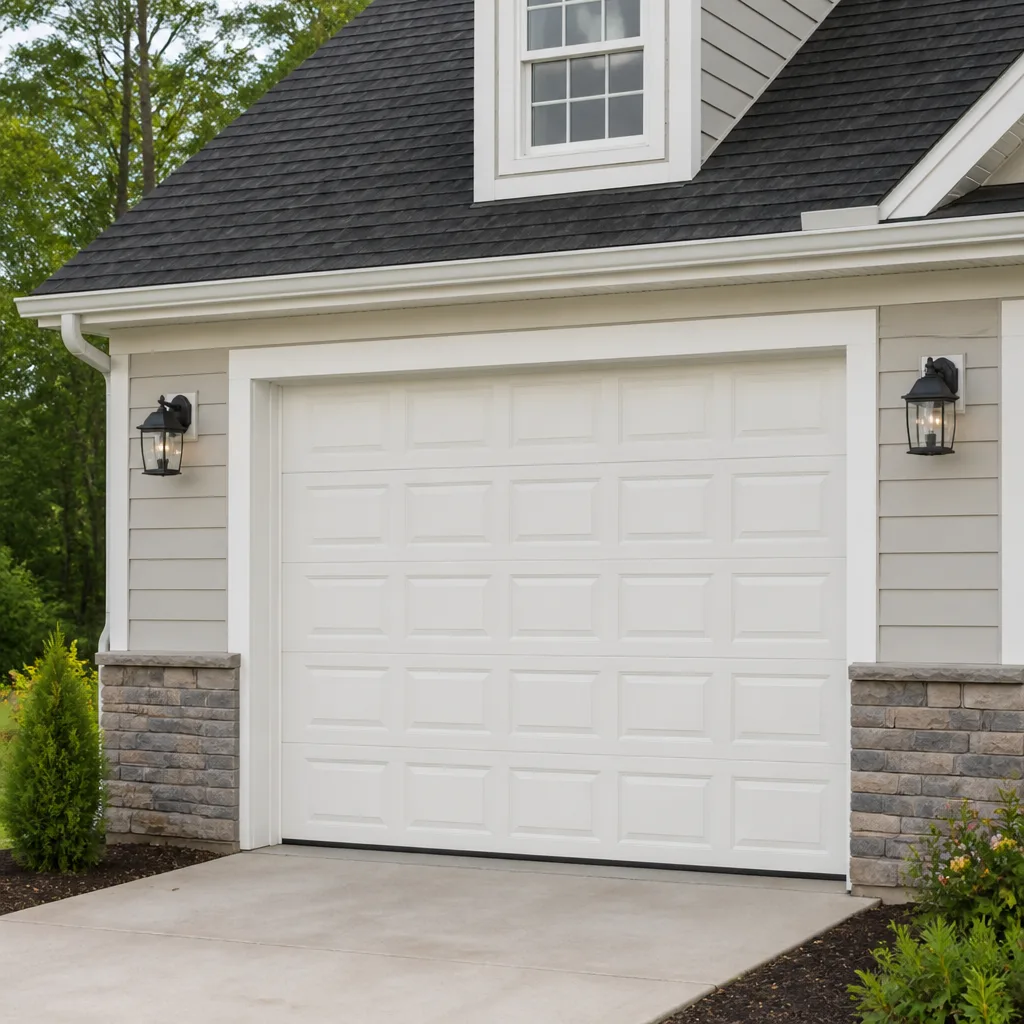 Raised-panel steel
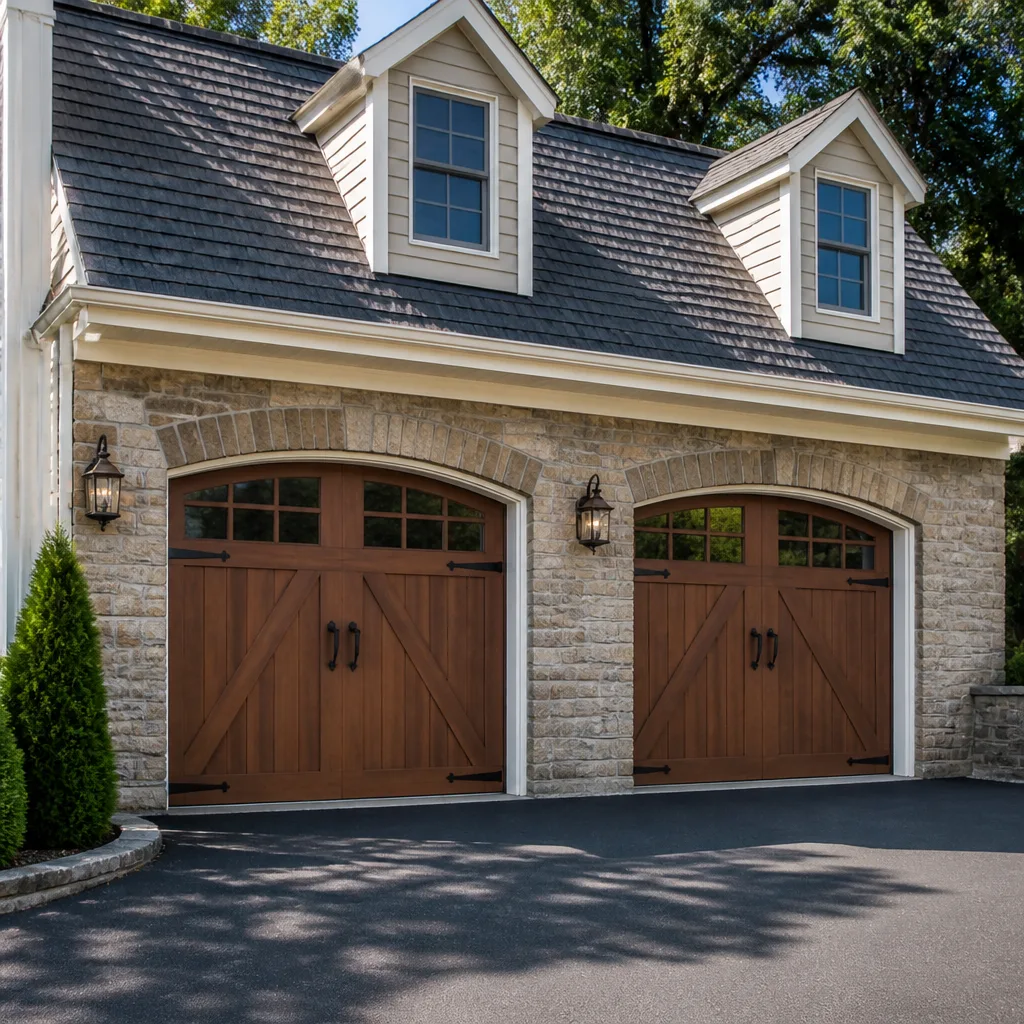 Carriage house
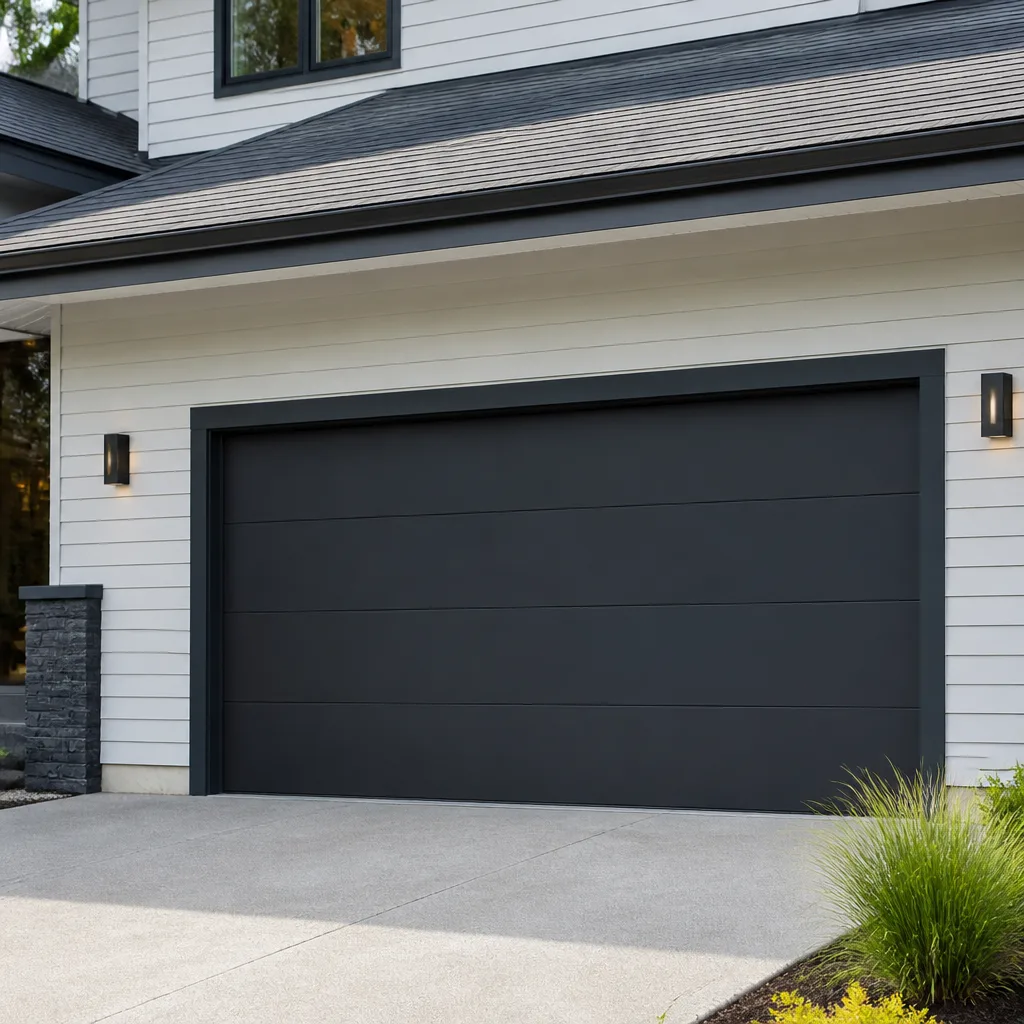 Modern flush
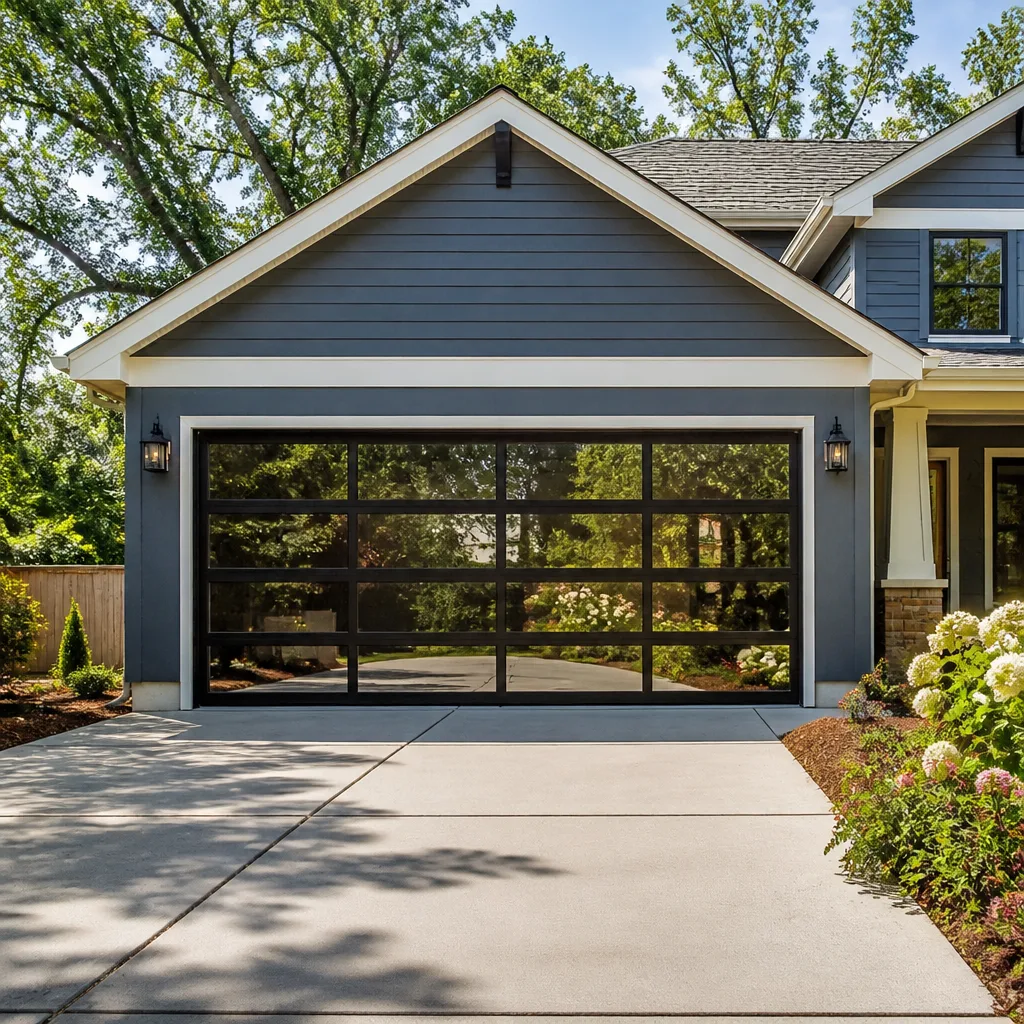 Full-view glass
 LiftMaster openers
 Chamberlain openers
Full 25-point door and opener safety check with every visit - springs, cables, rollers, tracks, and your LiftMaster or Chamberlain opener included
You get a price before we start. It does not change when the pro arrives.
Get your free estimateGarage Door Repair Maintenance Checklist for Wichita Falls Homeowners
The most common maintenance mistake we see isn’t skipping lubrication at all. It’s lubricating the wrong parts with the wrong product and speeding up the wear. A homeowner sprays a little WD-40 on every hinge and roller, hears the squeak quiet down for a week, and assumes the job is done. In a Wichita Falls garage in July, that quiet is short-lived, and the parts underneath are worse for it. The heat and dust here punish a door differently than a lot of national checklists admit. This guide walks through what actually needs attention in Wichita Falls, what you can check in two minutes, and what should stay in a technician’s hands.
Quick Answer
A working garage door maintenance routine in Wichita Falls comes down to five things: lubricating the right metal parts with a garage-door-specific lube (not WD-40), checking springs and cables with your eyes and ears only, replacing worn weatherstripping often in our heat, tightening hardware before it rattles loose, and keeping a simple written log so a technician can spot trends instead of a single symptom. The monthly check takes two minutes. The heavier work belongs with a professional.
Styles & brands we work with
- Raised-panel steel
- Carriage house
- Modern flush
- Full-view glass
- LiftMaster openers
- Chamberlain openers
Table of Contents
- The Lubrication Rule That Actually Matters Here
- Testing Spring Tension Without Touching the Springs
- Why Weatherstripping Fails Faster in Wichita Falls
- The Two-Minute Monthly Check
- Annual Tasks That Need a Technician
- How to Document Your Door’s Condition Over Time
- What Brand You Own Changes the Maintenance Picture
- What Maintenance and Repair Typically Cost in Wichita Falls
The Lubrication Rule That Actually Matters Here
Garage door hinges, rollers, and the torsion spring coils want a lithium- or silicone-based garage door lubricant, not a penetrating oil. WD-40 is a great product for a lot of things. It is the wrong answer for most moving parts on a garage door because it is a solvent-based penetrant, not a lasting lubricant. It thins out and evaporates, and in the Wichita Falls heat it disappears quicker than it would in a cooler climate. What’s left is a tacky surface that grabs dust, which turns into grit, which grinds the roller track. We’ve taken apart plenty of doors here where the owner had been “keeping up with it” for months, and the rollers were dry and gritty underneath a film of old spray.
Here’s the part most checklists get right but don’t explain: not every metal surface needs lube. Some need to stay clean and dry.
- Lubricate: the hinges at the pivot points, the steel rollers (a light coat on the bearing), the torsion spring coils, and the opener’s chain or screw drive – check your opener manual for the right product there.
- Leave dry: the nylon rollers, the horizontal tracks, and the garage door’s painted surface. Greasing the tracks attracts dirt and dust into the exact path the rollers travel.
- Never use: WD-40, cooking spray, or heavy axle grease on hinges. Penetrants evaporate; heavy grease holds grit in the heat.
The Wichita Falls climate matters here because our summers are long and hot. A door sitting in an attached garage with no climate control can hit temperatures that break down thin lubricants faster than the label suggests. A garage-door-specific lube applied twice a year usually holds up better than a general-purpose spray applied monthly. If your brand is Genie or Chamberlain on the opener side, the drive mechanism may call for a specific product the manufacturer spells out – follow that over anything a generic checklist says.
Testing Spring Tension Without Touching the Springs
You can find out a lot about your springs without laying a hand on them, and that’s the right approach. Torsion springs and the cables attached to them are under high tension and can cause serious injury if handled incorrectly. Never adjust, lubricate a cable, or try to test a spring by hand. Every check below is visual or mechanical – no contact with the spring itself.
Here’s the sequence we walk homeowners through over the phone:
- Listen to the door from inside. Start the door and stand in the garage. A thud, a bang, or a pop is a sign of a spring or tension problem. A consistent whine or hum is usually a mechanical or opener issue.
- Check the gap when the door is closed. A torsion spring that has lost tension will show a visible gap between the coils. If there’s a clear space between windings when the door is down, the spring is failing.
- Look at the cables with a flashlight. Cables should be taut and wound evenly on the drum. Fraying, kinks, or a loose cable means stop using the door.
- Test the balance by hand at the halfway point. Disconnect the opener (pull the release cord), lift the door to about chest height, and let go. The door should stay put or drift only slightly. If it slams down, the spring has lost tension.
- Watch the top of the door for a slant. A door that hangs crooked on one side usually points to spring, cable, or track trouble.
If any of those checks come up wrong, stop opening the door and call a technician. Springs are the one part of a garage door we tell every Wichita Falls homeowner to leave alone. That’s not a sales line – it’s the part of the system where a mistake can put someone in the hospital. On a repair call, our technicians can correctly identify which spring is failing, whether a matched pair needs to be replaced together, and what tension the door was built for.
Why Weatherstripping Fails Faster in Wichita Falls
The weatherstripping along the bottom, sides, and top of a garage door in Wichita Falls takes a beating the national average doesn’t account for. Our summers bring extended heat and our springs and falls bring wind, dust, and sudden temperature swings. Rubber seals dry out, crack, and lose their flexibility quicker here than in milder climates. The bottom seal in particular is the first thing to fail, because it takes the direct sun exposure and the pressure of the door coming down on the concrete.
Here’s what we tell homeowners to look for:
- Bottom seal: Run your hand along it when the door is down. It should feel flexible, not brittle or cracking. Any flattening or visible gap between the seal and the floor is a problem. In Wichita Falls, checking this every spring and fall is realistic.
- Side and top seals: Look for cracks, shrinkage, or daylight showing through when the door is closed. Dust getting past the seal is a sign it has pulled away.
- Wood trim around the opening: Dry heat can cause wood trim to warp or split. Look for separations where the frame meets the wall.
A worn bottom seal isn’t just a comfort issue. It lets dust, insects, and moisture in, and it can let heat out of the house in summer or cool air out in winter. Most homeowners in Wichita Falls find they replace the bottom seal more often than they expected – roughly on the shorter end of what the manufacturer’s rating suggests because of the heat. When the time comes, that’s a job we can schedule as part of a routine repair visit. It’s one of the small maintenance items that makes the biggest difference in a house with an attached garage.
The Two-Minute Monthly Check
This is the part of the checklist any homeowner can do without tools, in about the time it takes to drink a cup of coffee. Do it at the same time every month and you’ll catch problems earlier than a once-a-year inspection would. The Wichita Falls heat loosens hardware a little faster than milder climates, so a quick monthly look is worth the two minutes.
- Watch the door open and close. Listen for new sounds – grinding, banging, a bang at the end of travel. Watch for jerky movement or a door that lags on one side.
- Run a quick flashlight check on hinges and bolts. Look for missing screws, loose nuts at the hinge pivot, and any gap forming between the hinge and the door panel.
- Check the rollers. Look for cracks, chips, or a wobbling roller. A roller that moves out of its track is a warning sign.
- Test the safety reverse. With the door closing, wave an object into the beam of the photo-eye sensors mounted near the floor. The door should reverse on contact or when the beam is broken. Test the pressure reverse by laying a roll of paper towels or a 2×4 flat under the door and closing it – the door should reverse on contact with the object.
- Look for daylight and hear for squeaks. Any daylight through the seals or a new squeak you didn’t hear last month goes on your log (see the documentation section below).
None of this requires touching a spring, a cable, or a tension adjustment. It’s the “eyes and ears” portion of maintenance, and it’s the part that catches the most problems early. If any of these checks turn up something that needs attention, that’s when a technician visit pays for itself – catching a worn roller or a loose hinge is far easier than catching a bent track or a snapped spring.
Annual Tasks That Need a Technician
There’s a whole layer of garage door maintenance that looks simple but needs the right tools, the right knowledge, and someone who understands the forces involved. Springs, cables, and track alignment fall into that category. Here’s what we recommend an annual or every-other-year professional visit cover:
- Spring tension and cycle count assessment. Springs have a rated cycle life, and a technician can inspect the coils for fatigue and tell you roughly how much life is left before failure. Replacing a spring before it snaps costs less than emergency repair, and it avoids the middle-of-the-night stranding.
- Cable inspection and derailment check. Cables stretch and can fray in ways that aren’t visible from the outside. A technician can inspect and adjust without putting themselves or your door at risk.
- Track alignment and roller replacement. Tracks can go out of plumb in a structure that settles – common in homes across Wichita Falls in the older neighborhoods. Roller replacement is also something a professional can do in one visit if a worn roller has started to fail.
- Opener inspection and force adjustment. The opener’s force setting should be calibrated so the door reverses properly and doesn’t stress the motor. If your brand is LiftMaster, Chamberlain, Genie, or a Craftsman unit that’s been in the garage for years, we know the adjustment points on each.
- Weather seal replacement. A technician can replace the bottom seal, side seals, and top seal in a single appointment and check that the new seals sit flush on the slab.
For a garage door repair call, this kind of annual inspection is often the best way to prevent the bigger problems – and it’s cheaper than a full replacement. If your opener needs work, that’s a separate visit covered under garage door opener repair. We work on the brand you already have, whatever it is.
How to Document Your Door’s Condition Over Time
The single best thing you can do for your garage door is keep a simple written record. The reason is simple: a technician called out for one symptom has to guess whether the door has been squeaking for a month or a year. A homeowner with a log can tell us what changed when – and that changes the diagnosis. A short entry once a month takes a minute and gives you a record a professional can actually use.
Keep it in a notebook or a notes app. What to record:
- Date of each monthly check and whether anything looked different (new noise, new gap, new squeak).
- Any visual changes you noticed – daylight through a seal, a roller that looks cracked, a hinge that seems loose.
- Any lubrication or adjustments you did, with the product used.
- Any professional visit – what was inspected, what was found, and what was repaired. This is the most valuable line in the log, because it’s the only record of the door’s actual mechanical history.
- Any notable weather – a dry spell, a wind storm, or a summer with more days above 100 than recent years. Wichita Falls summers swing enough that a technician can use that context.
When a technician arrives with your log, they aren’t starting from scratch – they’re reading a trend. Worn rollers, a seal that has been replaced twice in two years, an opener that hums a little louder than last spring. That’s the difference between fixing a symptom and diagnosing what’s actually happening.
What Brand You Own Changes the Maintenance Picture
Garage doors and openers aren’t all built the same. Whether your door is a Clopay, an Amarr, or a Wayne Dalton matters for how its springs, rollers, and seals are configured, and how long each part is expected to last. The same goes for the opener – a Chamberlain or a LiftMaster has different recommended service intervals than a Genie. When you call a specialist who works across these brands, the technician recognizes the parts and the quirks before the truck arrives.
Here’s the practical difference for maintenance:
- Door manufacturers (Clopay, Amarr, Wayne Dalton, Raynor): Each has its own hinge style, spring configuration, and panel construction. Maintenance frequency can vary slightly by model.
- Opener manufacturers (LiftMaster, Chamberlain, Genie, Craftsman): Each has its own drivetrain design and recommended drive lubrication, and each has a unique force adjustment.
- Old equipment: An opener that’s been in the garage longer than the door has often been serviced less than the door – which is why it’s usually the first thing to fail.
We work on the system you already have. There’s no preferred brand we try to steer you toward. Whether it’s the door, the opener, or both that need attention, that’s what a specialist should be able to tell you on arrival.
What Maintenance and Repair Typically Cost in Wichita Falls
Most routine maintenance visits in Wichita Falls fall in the range of what a single service call covers, and specific repairs depend on the part and the brand. A bottom weather seal replacement, a set of rollers, a hinge adjustment, or a spring replacement each carry their own typical price band. Here’s what homeowners can generally expect:
- Routine maintenance and inspection visit: typically $90 to $175 depending on what’s checked and adjusted.
- Bottom weather seal replacement: typically $80 to $160, depending on door width.
- Roller replacement (set): typically $60 to $140 depending on the roller type.
- Spring replacement – single spring: typically $180 to $340 depending on the spring type and door size. A matched pair is usually replaced together, and the pair typically costs about twice the single-spring range.
- Opener repair: typically $100 to $260 depending on the failure point.
These are estimates. The written quote you receive before any work starts sets the actual price. We quote and agree on the price before a technician begins the job, so there’s no surprise on the invoice. If you’re looking for Wichita Falls pricing on any of these, the exact number depends on what the technician finds once they see the door.
Common Mistakes to Avoid
- Using WD-40 on the hinges and rollers. It evaporates and leaves a tacky surface that attracts dust, which wears the rollers faster in our heat.
- Oiling the horizontal tracks. The tracks should stay dry. Grease on the tracks pulls grit into the roller path.
- Trying to adjust a spring or cable by hand. This is the one part of the door that can cause serious injury. It stays with a professional.
- Ignoring the bottom seal. It’s the first thing to fail in Wichita Falls because of the heat and direct sun exposure. Replacing it regularly beats letting moisture and dust in.
- Skipping the safety reverse test. If the door doesn’t reverse on the photo-eye sensor or the pressure test, it’s not safe to leave up.
- Replacing a door when only the opener is failing. It’s common for the opener to fail while the door has years left. A technician can tell you which one is actually the problem.
- Not keeping a maintenance log. Without a record, every visit starts from scratch.
See the difference
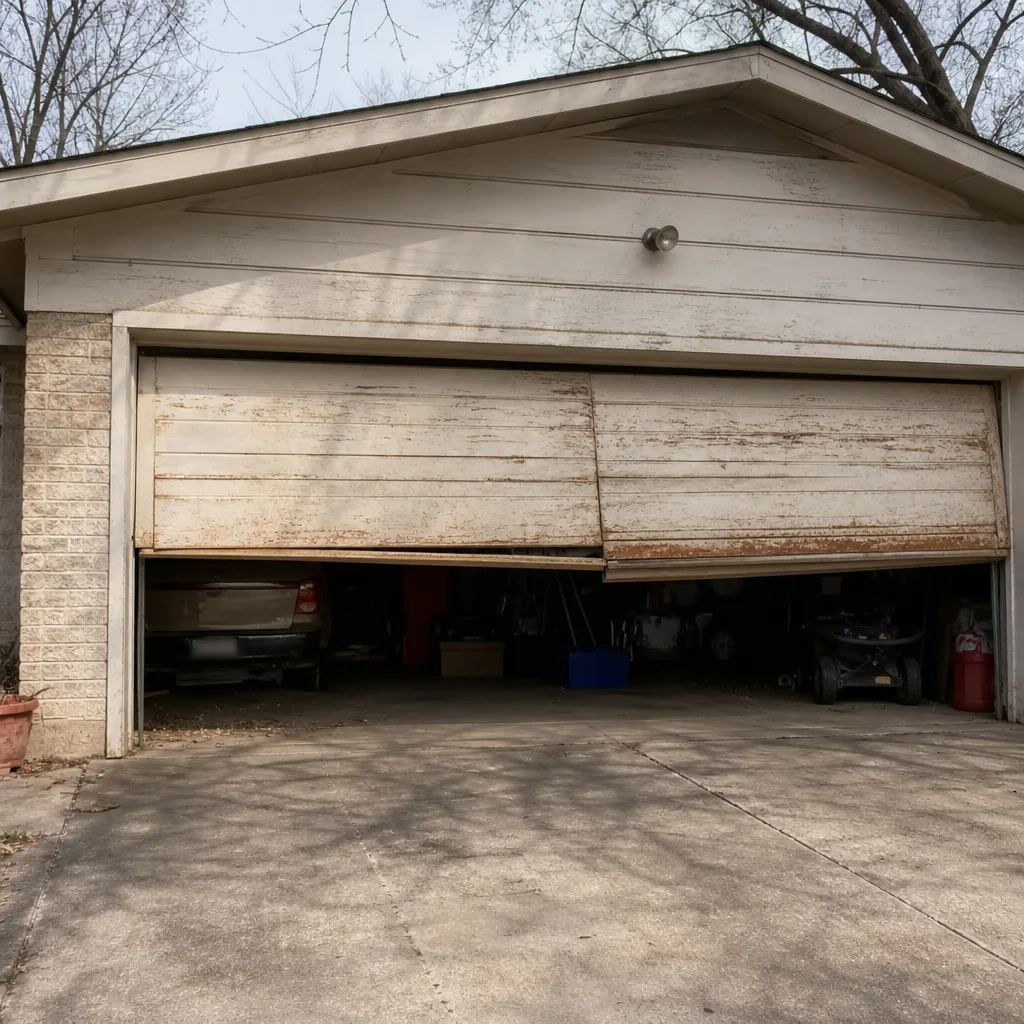 Before
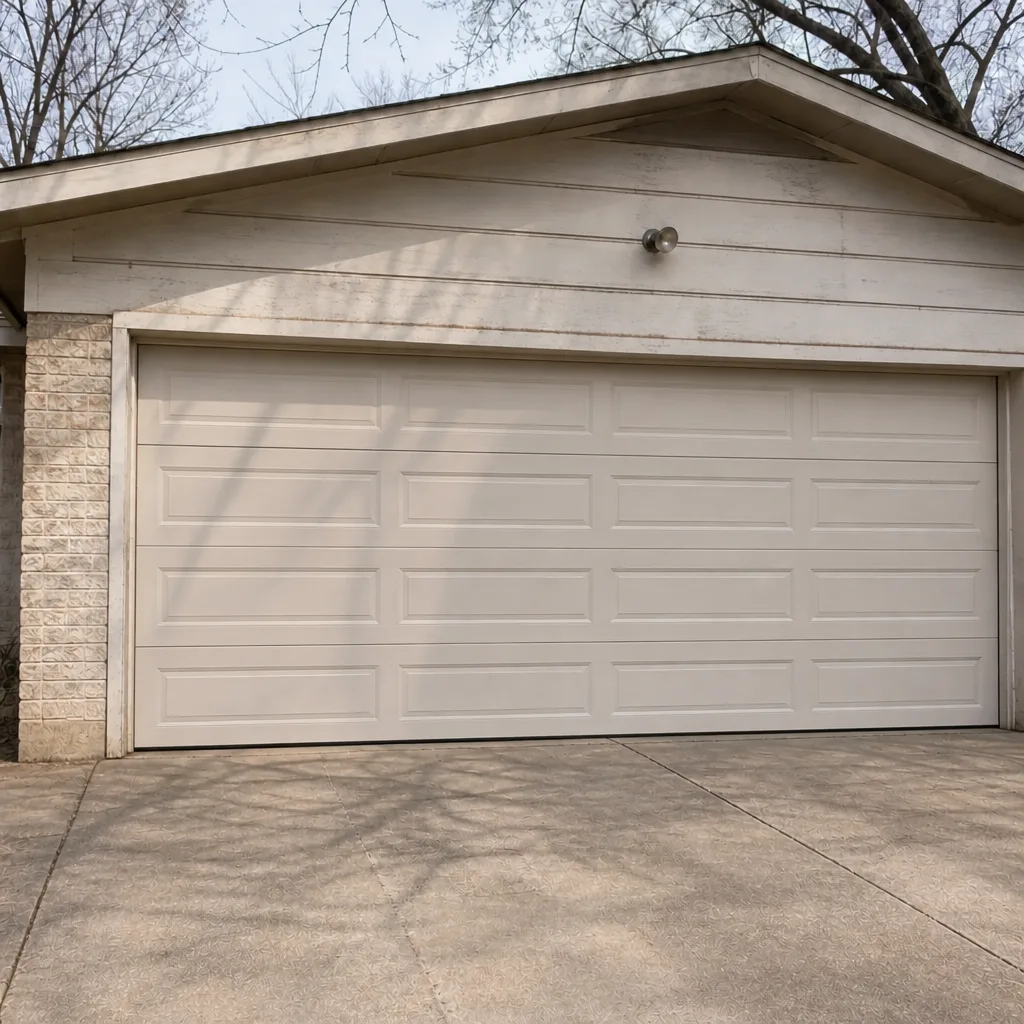 After
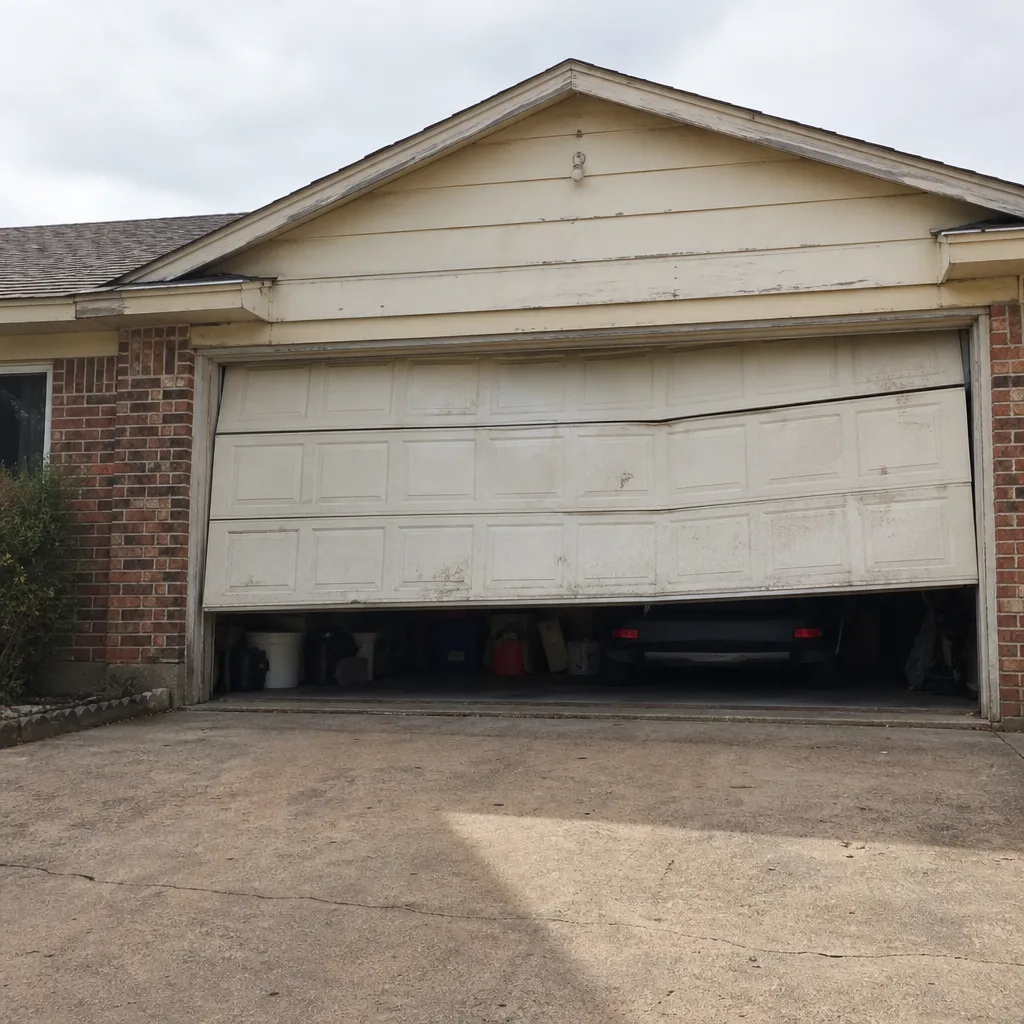 Before
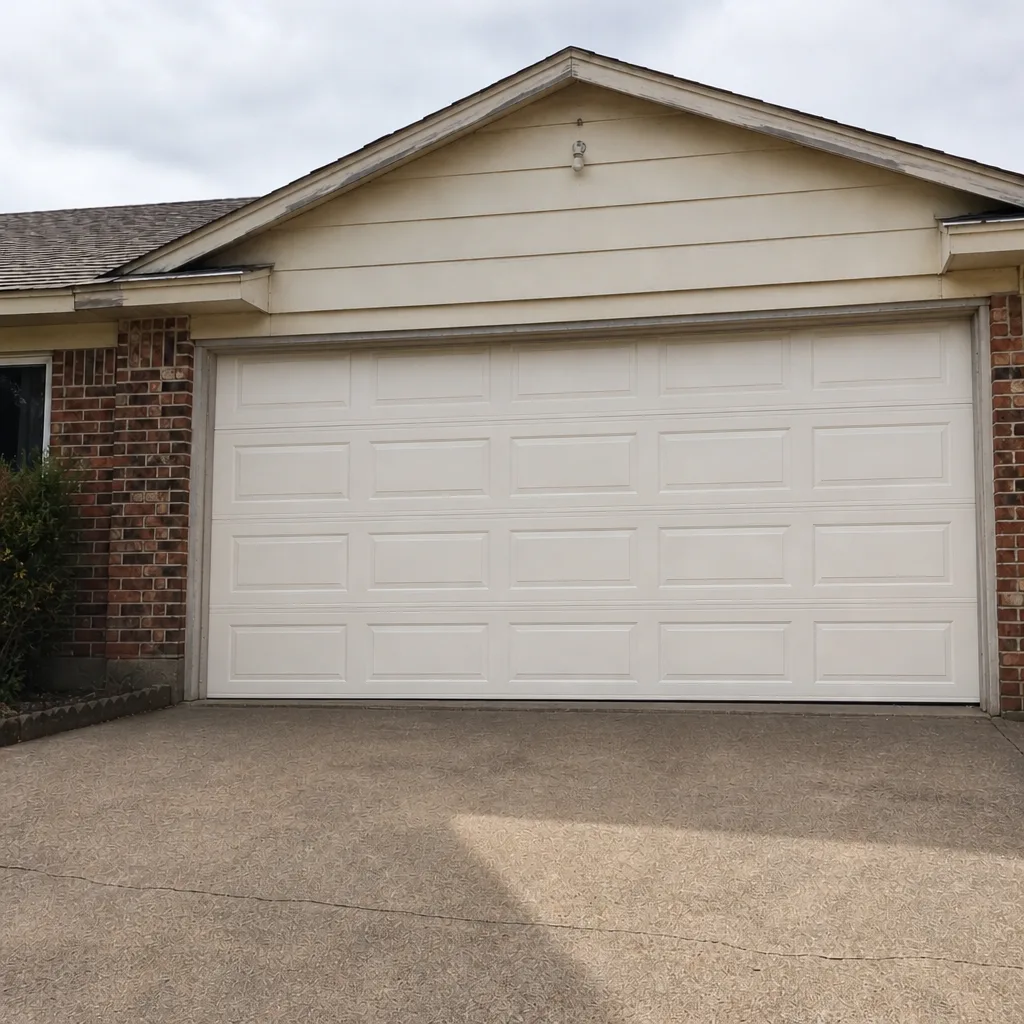 After
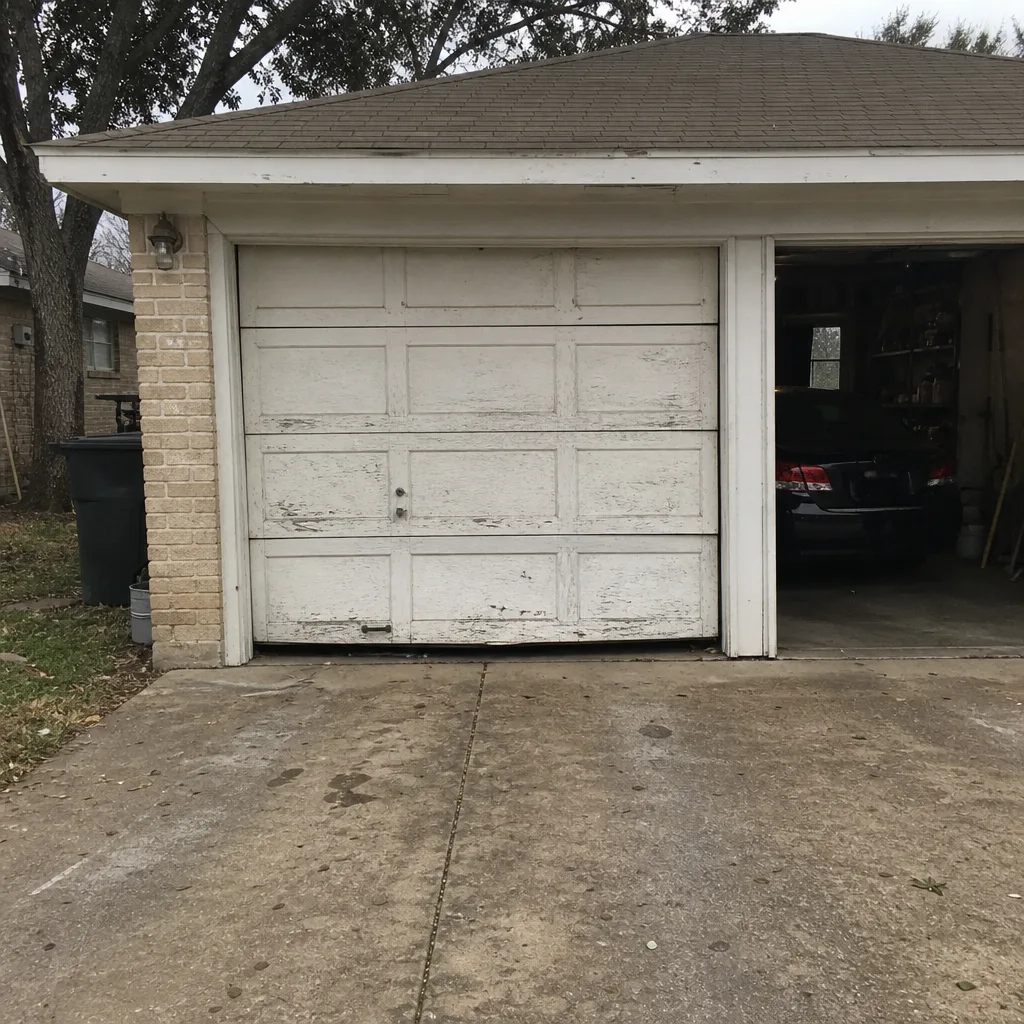 Before
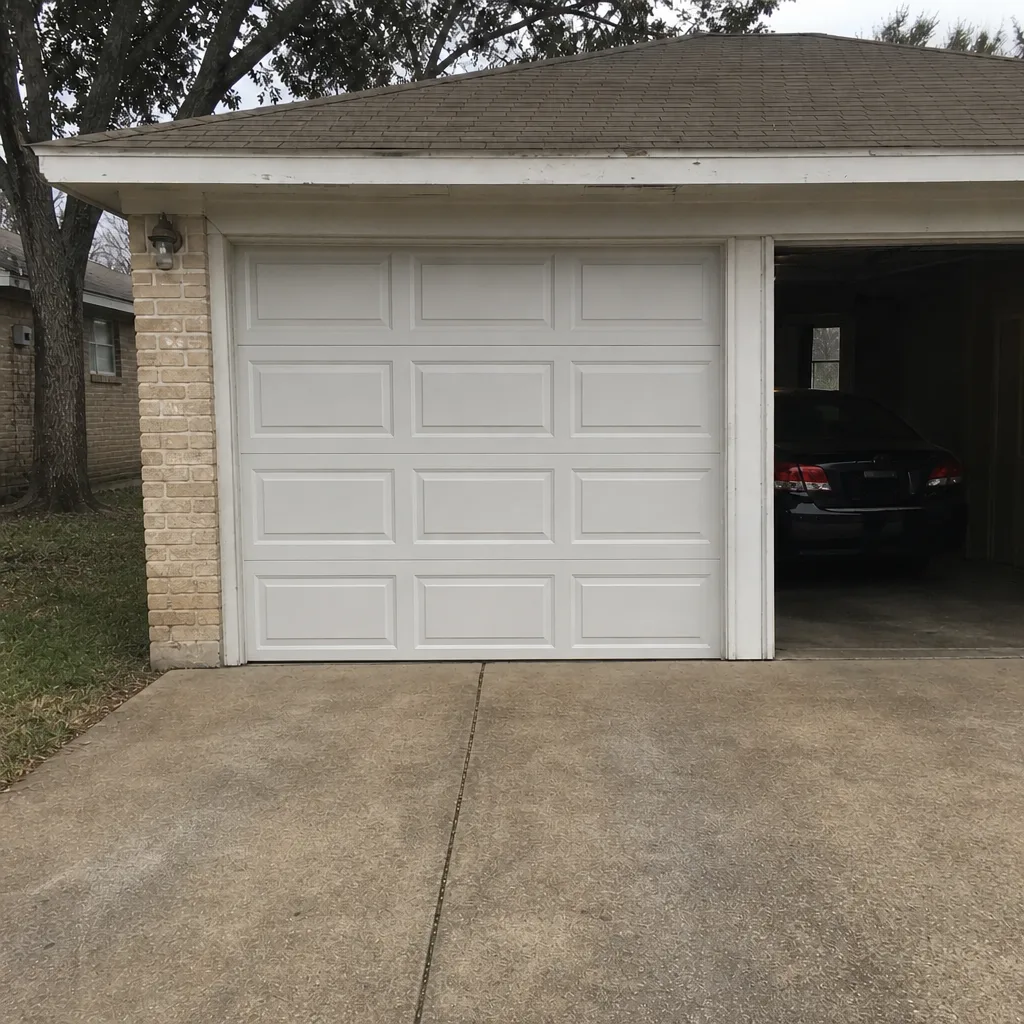 After
When to Call a Professional
Call a technician if any of these happen: the door slams down when you release it at the halfway point, there’s a thud or bang when the door opens or closes, a spring is visibly gapped, a cable is loose or frayed, the safety reverse isn’t working, the door hangs crooked, or the opener hums but doesn’t move the door. Any of those is a maintenance issue beyond what you should handle. We offer free estimates in Wichita Falls, and our technicians have up to 10 years of experience across the brands most homeowners own. Call (844) 524-5488. We answer 24/7. Fast dispatch from 7am to 7pm, Sunday through Friday.
Frequently Asked Questions
Lubricate twice a year, run the two-minute monthly check every month, and schedule a professional inspection once a year. The heat and dust here wear parts a little faster than in milder climates, so the spring and fall check-ins are worth sticking to.
No. WD-40 is a penetrating oil, not a lasting lubricant. It evaporates and leaves a tacky film that attracts dust, which wears rollers and hinges faster. Use a lithium- or silicone-based garage door lubricant on the hinges, rollers, and spring coils.
You can check for a visible gap in the spring coils and test the door’s balance at the halfway point – but never touch, adjust, or try to test a spring by hand. Springs are under high tension and can cause serious injury. If a check comes up wrong, call a technician.
Run your hand along the bottom seal when the door is down. If it feels brittle, shows cracks, or there’s daylight showing through, it’s time. In Wichita Falls, checking every spring and fall is realistic because the rubber dries out faster here.
A routine maintenance visit is usually cheaper than a repair call, because it catches problems before they cause damage. Both are quoted in advance. Call (844) 524-5488 for an exact quote – estimates are free.
Our technicians are experienced professionals who work only on garage doors – repairs, opener work, and installations. Call (844) 524-5488 to confirm current credential details before any work is scheduled.
The Bottom Line
The garage door maintenance checklist that actually works in Wichita Falls is the one built around our climate, not the national brand’s website. Lubricate the right parts with the right product. Check springs and cables with your eyes and ears, never with your hands. Replace weatherstripping as often as the heat demands. Run the two-minute monthly check so nothing catches you off guard. And keep a written log so a technician sees a trend, not a symptom. Nothing on this list is difficult. Most of it takes minutes a month. The handful of items that need a professional – springs, cables, tracks, force adjustments – are the ones that go wrong quietly. When they do, we’re ready to help. Hayden Garage Door Repair is a garage door specialist, and that’s all we do. Learn more on Hayden Garage Door Repair.
Call (844) 524-5488 for a free estimate. We answer 24/7. Fast dispatch from 7am to 7pm, Sunday through Friday. Same-day service is available, and any price is quoted and agreed before work starts.
Written by the team at Hayden Garage Door Repair.